

Does your face feel tight after cleansing, look flaky, or sting when you apply products that usually feel fine? Your skin may be irritated, but redness and dryness can have several causes. A simpler routine can help reduce extra irritation while you figure out what your skin tolerates.
To support a stressed skin barrier, focus on three basics: gentle cleansing, a moisturizer your skin tolerates, and daytime sun protection. You do not need a complicated 10-step routine. Start with fewer products, introduce changes slowly, and get medical advice if symptoms are severe or persistent.
What is the skin barrier?
The skin barrier is the outer layer of your skin. It helps hold moisture in and protect skin from everyday irritants. When this layer is disrupted, skin can feel dry, rough, itchy, or more sensitive than usual. The American Academy of Dermatology explains the skin barrier and its role in keeping skin hydrated and protected.
“Damaged skin barrier” is a common skincare phrase, not a diagnosis. Similar symptoms can also happen with eczema, rosacea, or an allergic reaction to a product. If you are unsure what is causing your symptoms, a dermatologist can help identify the cause.
Signs your skin may be irritated
A stressed or irritated skin barrier may come with:
- Dryness, tightness, or rough patches
- Flaking or peeling
- Redness or itching
- Stinging or burning when you apply skincare
- Skin that suddenly reacts to products you used before
These signs alone do not confirm barrier damage. Pay attention to when they began and whether you recently added a product, increased exfoliation, or changed your cleansing routine.
What can make skin feel more sensitive?
A few common routine and environment changes can leave skin feeling uncomfortable:
- Too much exfoliation: Frequent scrubs or exfoliating acids can irritate skin, especially when combined with other active products.
- Adding strong products too quickly: Retinoids and ingredients such as glycolic acid can irritate sensitive skin.
- Harsh cleansing: Hot water, scrubbing, or a cleanser that leaves your face feeling tight may add to dryness.
- A new product or ingredient: Fragrance and other ingredients can trigger irritation or an allergic reaction in some people.
- Cold, dry weather: Canadian winter air and indoor heating can contribute to dry, chapped skin.
The AAD recommends gentle face washing and notes that cold, dry conditions can worsen dry skin. Your skin may respond differently from someone else’s, so choose products by how your skin tolerates them—not only by a trend or ingredient list.
A simple Korean skincare routine for irritated skin
Korean skincare can be simple. While your skin is uncomfortable, focus on a few steps and avoid adding several new products at once.
Morning
1. Cleanse lightly, if needed.
If your face feels comfortable in the morning, rinsing with lukewarm water may be enough. If you prefer a cleanser, use a gentle one and apply it with your fingertips. Do not scrub with a washcloth or brush.
2. Apply a moisturizer your skin tolerates.
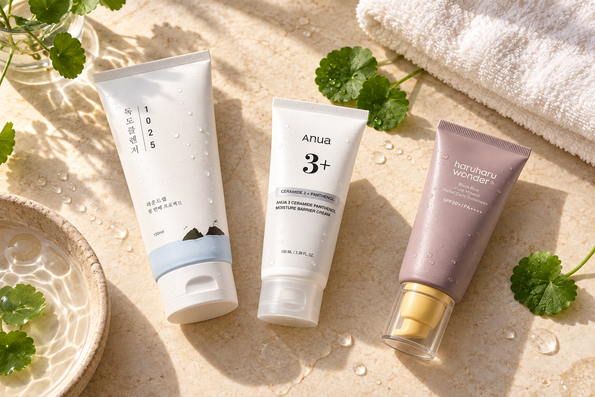
Use a comfortable layer after washing. Ingredients such as ceramides and panthenol are common in moisturizers designed to support hydration, but no product works the same way for everyone. KoreanShop’s Anua 3 Ceramide Panthenol Moisture Barrier Cream is one option listed with ceramides and panthenol. Check its full ingredient list and patch test before using it on your face.
3. Keep sun protection in your routine.
Use a sunscreen you already tolerate. The AAD recommends a broad-spectrum sunscreen with SPF 30 or higher. If sunscreen stings, do not keep forcing that formula onto irritated skin; ask a dermatologist or pharmacist about options that may suit you.
Evening
1. Remove sunscreen and daily buildup gently.
Use a mild cleanser with lukewarm water and your fingertips, then rinse well and pat dry. Browse KoreanShop’s facial cleanser selection and compare the full ingredient lists. A product marketed for sensitive skin can still irritate an individual.
2. Moisturize after cleansing.
Apply your moisturizer while your skin is slightly damp. Keep the rest of your routine minimal. You do not need toner, essence, serum, and a sleeping mask just because they are part of a longer Korean routine.
What should you pause—and when can you add products back?
If a non-prescription active product seems to be making your skin sting or peel, consider pausing it while you simplify your routine. Do not stop or change a prescribed treatment without checking with the clinician who recommended it.
When your skin feels comfortable again, reintroduce products one at a time so you can notice how your skin responds. The AAD’s guide to testing skincare products recommends testing a product on a small area twice a day for 7–10 days before using it more widely. If a product causes a reaction, wash it off and stop using it.
When should you see a dermatologist?
Redness, burning, and dryness can have causes that need more than a skincare routine. Consider speaking with a dermatologist if your symptoms are painful, keep getting worse, or do not settle. The AAD advises making an appointment if facial redness lasts more than two weeks. Seek prompt medical advice for a severe reaction, swelling, or a spreading rash.
FAQs
How long does it take to repair a damaged skin barrier?
There is no single timeline because the cause and the person’s skin are different. Simplifying your routine may reduce extra irritation, but persistent or worsening symptoms deserve medical advice.
Should I stop using retinol or exfoliating acids?
If a non-prescription active product seems to trigger irritation, pause it while you simplify your routine. If it was prescribed, speak with your prescriber before changing how you use it.
Do I need a 10-step Korean skincare routine?
No. A short routine with gentle cleansing, moisturizer, and daytime sun protection can be a practical place to start. Add other products only when your skin is comfortable and you have a clear reason to use them.
Can a moisturizer fix every cause of redness?
No. A moisturizer can support hydration, but redness may have causes such as eczema, rosacea, or contact dermatitis. A dermatologist can help identify the cause and recommend appropriate care.
A calmer routine starts with fewer steps. Choose products carefully, give your skin time to respond, and ask a dermatologist when symptoms are severe or persistent.