
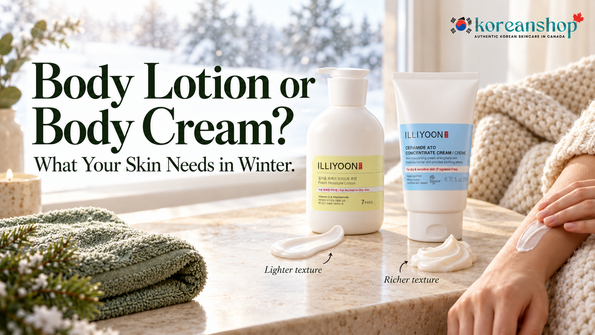
Body lotion or body cream—which one makes more sense when winter leaves your skin feeling dry?
Lotion is usually lighter and easier to spread. Cream is generally thicker and can be a better choice when dryness becomes more noticeable. But you do not have to replace every bottle in your bathroom as soon as the temperature drops.
Think about how your skin feels a few hours after moisturizing. Are your arms comfortable until bedtime? Do your lower legs feel tight again before lunch? Are your hands rough even though you apply lotion regularly?
Those details are more useful than choosing a product simply because the label says “winter care.”
For people in Canada, cold outdoor air and heated indoor spaces can make body care feel different from one season to the next. This guide explains the difference between lotion and cream, how to choose between them and how to build a simple winter routine.
Why Does Body Skin Feel Drier in Winter?
Your skin loses water more easily when the surrounding air is dry. Winter heating can also contribute to dryness indoors, leaving skin feeling tight, rough or chapped. American Academy of Dermatology guidance on dry skin.
You may notice the change first on your hands, elbows or lower legs. Other areas may still feel comfortable with the same lotion you used in summer.
That does not mean you need one heavy product from head to toe. It means your routine may need a small adjustment.
Canada also has different climates, homes and working conditions. Someone who spends the day outdoors may have different needs from someone in a heated office.
Start with your own skin rather than a fixed seasonal shopping list.
Body Lotion vs Body Cream: What Is the Difference?
Both lotions and creams are moisturizers. Their job is to help keep skin comfortable and reduce dryness.
The main practical difference is usually their texture.
| Feature | Body lotion | Body cream |
|---|---|---|
| Typical feel | Lighter and more fluid | Thicker and richer |
| Application | Often easy to spread over large areas | May take a little more spreading |
| Useful starting point | Mild dryness or a preference for a light finish | More noticeable dryness |
| When to reassess | Skin feels dry again soon after use | The finish feels too heavy or uncomfortable |
These are general patterns, not rules for every product. The complete formula matters as well as the word on the front.
The AAD describes creams as generally thicker than lotions and recommends creams or ointments when skin is particularly dry. Choosing a moisturizer.
A pump bottle does not automatically mean a moisturizer is too light, and a jar does not guarantee better results. Compare the product information with how your skin responds.
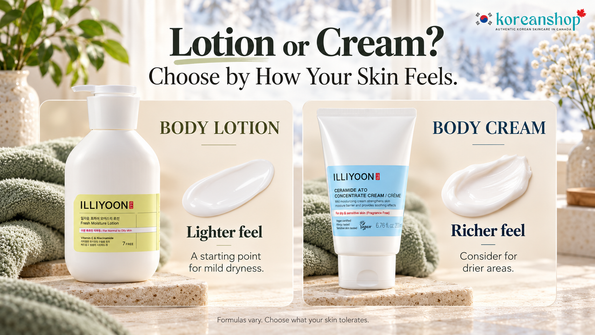
When Body Lotion May Be Enough
Body lotion can remain useful in winter if it keeps your skin comfortable.
You may prefer it when your skin is only slightly dry, you want something easy to spread or you dislike a rich finish under clothes.
For example, your arms and upper body might feel fine after lotion while your shins need extra attention. There is no need to change a product that is doing its job in those comfortable areas.
Ask yourself:
- Does my skin still feel comfortable later in the day?
- Am I applying the lotion regularly?
- Does it cause itching, burning or another reaction?
- Am I judging the product after one rushed application?
Consistency matters. A lotion you use properly may fit your routine better than a cream you avoid because you dislike the feel.
However, if your skin remains dry despite regular application, reassess the texture and your bathing habits rather than simply adding more layers indefinitely.
When Body Cream Is Worth Considering
Body cream is worth comparing when lotion no longer leaves your skin comfortable.
You might notice rough lower legs, tightness after getting dressed or dry areas that return quickly after moisturizing.
A richer texture can be useful for these areas, especially during colder months. The Eczema Society of Canada notes that people managing winter eczema may need to move from lotions to creams or ointments as conditions become colder and drier. Fragrance and essential oils can also irritate sensitive skin. Canadian winter skin-care guidance.
That advice does not mean every dry patch is eczema. If you have a persistent rash, get advice rather than choosing products based on a suspected diagnosis.
A cream is still a cosmetic moisturizer unless it is specifically a treatment product. It should not be expected to treat every cause of itching or skin inflammation.
Do You Need Both Lotion and Cream?
Not necessarily.
You can use one moisturizer that suits your body, or use different textures in different places.
A practical arrangement might be:
- Lotion on areas that feel comfortable with a lighter finish.
- Cream on drier legs, elbows or hands.
- A clinician-recommended product for an existing skin condition.
You might also prefer lotion during a busy morning and cream later, when you have more time.
Treat these as options rather than required steps. You do not need to apply lotion, cream and oil together simply because all three are available.
The Eczema Society of Canada emphasises choosing a moisturizer you are willing to use often enough, alongside suitable application habits. Moisturizer advice from the Eczema Society of Canada.
How to Choose a Winter Body Moisturizer
Start With Your Main Need
Are you trying to manage mild dryness, find a comfortable daily texture or care for very dry areas?
Write down the purpose before browsing. It helps you avoid buying a brightening, scented or exfoliating product when your main need is straightforward moisture.
Check Fragrance Carefully
For dry or sensitive skin, fragrance-free care is a useful starting point.
“Unscented” and “fragrance-free” do not always mean the same thing. An unscented product may contain ingredients that mask a smell. The AAD recommends gentle, fragrance-free products for dry skin. Dry-skin care advice.
A pleasant scent is a personal preference, but it should not take priority over comfort if your skin reacts.
Look Beyond One Popular Ingredient
Ingredients such as glycerin, ceramides and petrolatum appear in many moisturizing formulas. You do not need every familiar ingredient in one product.
The finished formula, your known sensitivities and how regularly you use it all matter.
Avoid assuming that a moisturizer must be expensive to be effective. Dermatology guidance notes that higher prices do not necessarily mean better skin-care results. AAD winter skin-care information.
Choose a Practical Size and Format
Think about how you will use the product.
A large bottle may suit daily body application. A smaller tube may be easier to keep by the sink or take to work.
Compare the amount supplied as well as the price. A small facial moisturizer may not be the most practical purchase if you plan to apply it over your arms and legs every day.
Korean Body-Care Options to Compare
For this blog, ILLIYOON offers examples of both lighter and richer formats without repeating the facial products from our earlier routines.
ILLIYOON Fresh Moisture Body Lotion 350ml
KoreanShop lists ILLIYOON Fresh Moisture Body Lotion 350ml as a lightweight body moisturizer with a non-sticky finish.
It is an option to compare if you prefer an easy-to-spread daily lotion. Check the current packaging and ingredient list, particularly if you avoid fragrance or have known sensitivities—the word “fresh” does not establish suitability for sensitive skin.
If your skin stays comfortable after using it, you may not need a heavier product everywhere. If dry areas remain uncomfortable, reconsider the formula or texture.
View ILLIYOON Fresh Moisture Body Lotion at KoreanShop.
ILLIYOON Ceramide Ato Concentrate Cream
For the cream side of the comparison, KoreanShop lists ILLIYOON Ceramide Ato Concentrate Cream 230ml.
This is the richer-format option to investigate when you want a cream rather than a fluid lotion. Review the current product directions and ingredients before choosing it.
It was listed as out of stock when checked, so confirm availability rather than planning around an immediate purchase.
View ILLIYOON Ceramide Ato Concentrate Cream.
A Smaller Way to Compare the Two Formats
KoreanShop also lists an ILLIYOON Ceramide Ato Travel Kit containing:
- Ceramide Ato Lotion 50ml.
- Ceramide Ato Concentrate Cream 30ml.
- Ceramide Ato 6.0 Top to Toe Wash 50ml.
The listing describes the lotion and cream as fragrance-free. Smaller formats may help you compare how they feel before buying larger sizes, although they do not guarantee tolerance.
You do not need the kit if your current moisturizer already works well.
View the ILLIYOON Ceramide Ato Travel Kit.
A Simple Winter Body-Care Routine
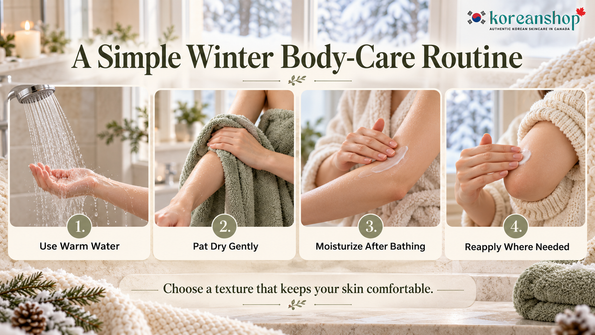
1. Keep Showers Comfortable, Not Very Hot
A hot shower can feel appealing after being outdoors, but it may make dry skin harder to manage.
Use warm water and keep bathing reasonably short. The AAD recommends warm rather than hot water and applying moisturizer after washing. Cold-weather skin-care guidance.
Review the body cleanser too. If washing repeatedly leaves your skin sore or tight, the moisturizer is only one part of the routine to assess.
2. Pat Dry Gently
Avoid rubbing dry patches firmly with a towel.
The aim is to remove excess water without adding friction. You do not have to wait until every trace of moisture has disappeared before using your moisturizer.
3. Moisturize Soon After Bathing
Applying moisturizer to slightly damp skin after bathing helps hold moisture in.
The Eczema Society of Canada recommends moisturizing shortly after a bath or shower and paying attention to products that contain potentially irritating fragrance or dyes. Canadian moisturizing guidance.
Keep your moisturizer somewhere convenient so this becomes part of getting dressed rather than a task you remember much later.
4. Check the Areas That Need More Help
Before bed, notice whether your hands, elbows or legs feel dry again.
You may need to reapply to those areas or try a richer texture. You do not necessarily need a second full-body application if other areas remain comfortable.
Follow any treatment instructions for eczema or another diagnosed condition.
5. Review the Result Before Buying More
After several consistent applications, ask whether the routine is practical and comfortable.
If the lotion works on your arms but not your lower legs, adjust the lower-leg step. If the cream feels uncomfortable everywhere, do not force yourself to use it because it is thicker.
Make one useful change at a time.
What if You Dislike a Heavy Finish?
A rich moisturizer can take some getting used to, but you should still choose something you can comfortably use.
Try applying it when you have a few minutes before dressing. Compare textures rather than assuming every cream feels the same.
For eczema, the Eczema Society of Canada notes that preference and regular use are important. That makes comfort part of the decision, not a minor detail. Choosing a usable moisturizer.
However, do not repeatedly reduce the amount to almost nothing if your skin remains dry. Consider another suitable formula or ask a pharmacist for help.
Common Winter Body-Care Mistakes
Buying a Cream Without Checking Your Shower Routine
A richer moisturizer may help, but repeated hot showers and an irritating cleanser can keep contributing to discomfort.
Review the whole routine.
Scrubbing Every Rough Patch
Flaky skin does not automatically need stronger exfoliation.
Columbia University’s winter skin guidance recommends considering a cream or ointment for dry skin and reviewing potentially irritating ingredients such as exfoliating acids and retinoids. Winter skin guidance.
Using More Products Than You Can Assess
Starting a new wash, scrub, lotion and cream together makes it difficult to identify a reaction.
Keep the routine simple enough to understand.
Assuming “For Sensitive Skin” Means Reaction-Free
No label can promise that a product will suit every person. Check known allergens and stop using a product that causes a reaction.
Waiting Until Skin Is Painfully Dry
Make moisturizing easy to remember. Keeping a suitable product near the shower or sink can be more useful than owning several bottles stored elsewhere.
When Dry Skin Needs Professional Advice
Get advice if dryness continues despite suitable care or if you develop painful cracks, persistent itching, bleeding or a rash.
Ongoing symptoms may involve eczema, contact dermatitis or another condition that needs treatment.
The Eczema Society of Canada recommends speaking with a qualified healthcare professional when persistent hand dryness or redness does not improve with frequent moisturizing. Winter hand-care advice.
Do not keep testing stronger cosmetics on worsening skin.
Frequently Asked Questions
Is body cream always better than lotion in winter?
No. Cream is often useful for more noticeable dryness, but lotion may be enough if your skin remains comfortable. The complete formula and regular use matter.
Can I use lotion in the morning and cream at night?
Yes, if body lotion or body cream both suit your skin. It is an option rather than a requirement.
Should I apply moisturizer to wet skin?
Slightly damp skin after bathing is a useful starting point. You do not need to leave water dripping from your body. Follow any specific product directions.
Can I use body lotion on my face?
Check the label and your tolerance. Body and facial products are not automatically interchangeable, especially if your face is sensitive or prone to breakouts.
Does body oil replace cream?
It depends on the formula and your needs. Do not assume any oil offers the same care as a complete moisturizer. Start with a suitable moisturizer and assess whether another step is necessary.
Do I need to change products as soon as winter starts?
No. Keep using a product that works, then adjust if your skin becomes dry or uncomfortable.
Choose the Texture Your Skin Needs
Body lotion or body cream does not have to be an all-or-nothing decision.
Keep lotion where it works. Consider cream for areas that need more support. Apply your moisturizer regularly, review bathing habits and seek advice when dryness does not settle.
You can compare the ILLIYOON range at KoreanShop and check current availability before purchasing.