
Moisturizer burning can happen when your skin is already irritated, very dry or reacting to something in the formula. It does not automatically mean you have an allergy, but it is not a sensation you need to push through to get results.
You wash your face, apply a cream that is supposed to feel comforting, and your cheeks start to sting. Perhaps it is a new moisturizer. More confusingly, it might be one you have used for months without a problem.
Before buying another cream, look at what changed around the time the burning started. A new exfoliant, more frequent cleansing, cold weather or a developing rash can all be relevant.
For people in Canada, the shift from milder weather to cold outdoor air and heated indoor spaces is another detail worth considering. Your usual routine may start feeling different even when the products stay the same.
This guide explains possible causes, what to do when moisturizer stings and when to get professional advice.
If a reaction includes difficulty breathing, throat or tongue swelling, or faintness, call 911 immediately. These can be signs of a serious allergic reaction. FDA guidance on cosmetic reactions.
Is Moisturizer Supposed to Burn?
An everyday moisturizer does not need to burn to moisturize your skin. Burning is not evidence that ingredients are penetrating more deeply or that the product is working harder.
Some emollients can briefly sting on cracked or sore skin without an allergy being present. However, persistent discomfort, worsening symptoms or a visible rash should not be dismissed as normal adjustment. NHS information on emollients.
There is also a difference between a brief sensation and pain that continues after application.
Ask yourself:
- Does the feeling settle, or become stronger?
- Does it happen every time?
- Is your skin itchy, swollen, unusually warm or visibly irritated?
- Does water or your cleanser sting too?
- Have you recently changed a treatment or how often you use it?
These observations can help a pharmacist or clinician understand the situation. They cannot reliably diagnose the cause on their own.
Why Moisturizer Burning Can Happen
1. Your Skin Is Already Dry or Irritated
Skin that feels tight, rough or sore may react differently to a cream than comfortable skin does.
If several products suddenly sting, consider the condition of your skin alongside the moisturizer itself. Irritant contact dermatitis can develop when chemical or physical exposures damage the skin surface. Repeated exposure to soaps, friction and certain treatments can contribute. DermNet’s explanation of irritant contact dermatitis.
“Damaged skin barrier” is a common phrase online, but burning alone does not confirm that diagnosis.
A useful question is whether your face felt uncomfortable before moisturizing. If washing, drying or touching your cheeks already hurts, the last product applied may not explain the whole problem.
2. Your Cleanser or Washing Habits Are Contributing
It is easy to blame the cream because that is when the sting becomes obvious.
However, the steps before it deserve attention too. Think about whether you recently started double cleansing more often, using a stronger cleanser or rubbing with a cleansing brush or washcloth.
Cleansers can cause irritation, and combining an acne cleanser with leave-on acne treatments may increase dryness and discomfort. DermNet guidance on soaps and cleansers.
Review how your skin feels immediately after rinsing. A persistently tight or sore finish is worth noting.
You do not need to wash again and again to investigate. Write down what you used and how your skin felt instead.
3. You Have Added Too Many Treatment Steps
A routine can become more demanding without looking complicated.
For example, you might use an exfoliating toner on some nights, a retinol serum on others and an acne treatment whenever a spot appears. Each step has its own instructions, but the combined routine may be harder for your skin to tolerate.
The American Academy of Dermatology warns that using several anti-ageing products together can irritate skin. If a prescribed product is involved, ask the prescriber about burning rather than changing treatment independently. AAD advice on using treatment products.
When moisturizer burning starts, review frequency as well as ingredients. Using an existing treatment more often is a change, even if you have not bought anything new.
4. An Ingredient Does Not Suit Your Skin
A moisturizer can be popular and still cause a reaction for an individual.
Fragrance, preservatives and other components can be relevant. That does not make every ingredient in those categories harmful; the problem depends on the person and the particular formula.
Descriptions such as “natural,” “gentle” or “for sensitive skin” do not guarantee that a product will suit everyone. Botanical ingredients can also contain fragrance-related substances. AAD guidance on testing skincare.
If one product repeatedly causes discomfort while others do not, keep its packaging and ingredient list. Those details are more useful than trying to identify a culprit from a single ingredient name online.
5. You May Have Contact Dermatitis
Contact dermatitis can result from irritation or an allergic response.
Possible symptoms include itching, burning, tenderness, dryness, swelling and a rash. Skin colour changes may look different across skin tones, so pay attention to discomfort and texture as well as redness. AAD contact dermatitis symptoms.
An allergic reaction can develop to something you previously tolerated. Having used a cream before does not completely rule it out. DermNet information on contact dermatitis.
You cannot reliably separate irritation from allergy by how quickly the sting begins. Repeated or persistent reactions deserve professional assessment.
6. An Existing Skin Condition May Be Involved
People with conditions such as eczema or rosacea may describe burning or stinging with moisturizers. A product that felt comfortable during a settled period may feel different when their skin is inflamed. DermNet information on moisturizer reactions.
If you already have a diagnosis, follow your care plan and ask your clinician or pharmacist about the change.
If you do not, avoid assuming that a social media description explains your symptoms. Similar-looking reactions can have different causes.
Can Canadian Winter Make Moisturizer Sting?
Winter can contribute to dryness and irritation, although it does not explain every reaction.
Cold outdoor air and heated indoor environments can reduce skin comfort. The AAD notes that low humidity and indoor heating can leave skin dry and chapped. Winter dryness information.
That makes seasonal timing worth recording. Did the burning begin after you turned on the furnace, started taking hotter showers or increased your use of exfoliating products?
Avoid assuming that everyone in Canada needs the same winter routine. Conditions vary by region, home and individual skin needs.
A richer cream may help some people with dryness, but putting a heavier layer of the same stinging product over sore skin is not a dependable solution. First establish whether the formula is comfortable and whether you need advice about the irritation.
What to Do When Moisturizer Burns
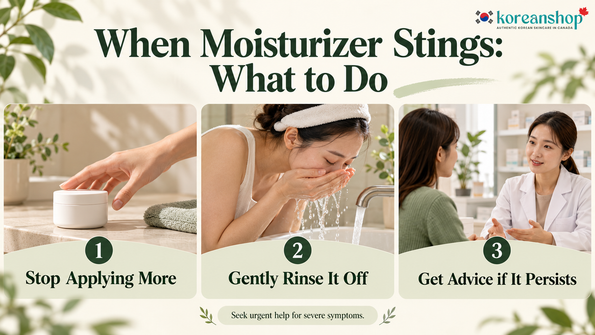
Stop Applying More Product
Do not add another layer to see whether the feeling improves. Pause optional skincare and assess what is happening.
If the product is causing a reaction, gently wash it off. Avoid scrubbing or using hot water.
A cool compress may help with mild discomfort. If symptoms are severe or do not settle, seek medical advice rather than continuing to manage them with more cosmetics. AAD advice for skincare reactions.
Avoid Trying Several Remedies at Once
This is not a good moment to test a new exfoliant, essential oil, mask or home remedy.
Adding multiple products makes it harder to identify what your skin can tolerate. Keep the packaging of the suspected product and make a note of the other products used that day.
If a prescribed medicine is part of your routine, contact the prescriber for instructions about ongoing use.
Get Help Choosing a Comfortable Alternative
You do not have to abandon moisturizing altogether because one product stings.
A pharmacist or clinician can help you choose another emollient and decide whether a rash needs treatment. The NHS advises seeking advice about burning or stinging that persists with emollient use. NHS emollient guidance.
If even previously comfortable products burn, arrange an assessment rather than working through a series of new purchases.
A Simple Record That Can Help Identify the Problem
Before your appointment or pharmacy visit, gather a few details.
| Detail | What to write down |
|---|---|
| Product | Exact name, version and ingredient list |
| Timing | When burning starts and how long it lasts |
| Location | Cheeks, eyelids, neck, around the mouth or elsewhere |
| Other symptoms | Itching, swelling, peeling, pain or rash |
| Routine changes | New products or increased treatment frequency |
| Previous reactions | Whether the same thing has happened before |
A photo can also help document a reaction that changes before you are seen.
For example, “my moisturizer burns” provides less information than:
“Both cheeks started stinging after application yesterday. I began using an exfoliating toner more frequently last week, and my cleanser has also started feeling uncomfortable.”
That does not establish the cause, but it gives the professional reviewing your skin a clearer starting point.
Choosing Skincare After Moisturizer Burning
Once the reaction has settled or you have received advice, keep your next choice straightforward.
Look for Fragrance-Free Options
Fragrance-free products are a reasonable starting point when trying to avoid fragrance exposure.
“Unscented” does not necessarily mean fragrance-free. Some products use ingredients to mask a smell, so read the label rather than relying on the scent alone. AAD testing and fragrance advice.
Prioritise Comfort Over Extra Treatment Claims
During a period of irritation, you may not need your moisturizer to exfoliate, brighten and address several other concerns at once.
Choose around the needs identified with your pharmacist or clinician. Do not assume a long ingredient list guarantees better results, or that a short list guarantees no reaction.
Consider the Whole Routine
A new cream cannot automatically compensate for an irritating cleanser or treatment schedule.
The AAD recommends gentle, fragrance-free care for dry skin and notes that persistent burning should be discussed with a dermatologist. Dry-skin care guidance.
Make changes deliberately so you can tell what helps.
Where KoreanShop Fits Into Your Routine
If you are browsing Korean skincare in Canada, you can explore KoreanShop’s current selection and review the available product information.
Before buying, compare the exact formula with any ingredients you have been advised to avoid. Check the current packaging, since product versions can change.
For questions about product sizes, availability or store locations, contact KoreanShop. For persistent burning, a suspected allergy or a rash, seek healthcare advice.
No cosmetic moisturizer can be promised to suit every person with sensitive skin. A “barrier” or “calming” product name is not a substitute for finding out why your skin is uncomfortable.
How to Test a New Moisturizer
Testing a new product on a small area may help reveal a reaction before broader use. It cannot guarantee that your face will tolerate it.
The AAD suggests applying the normal amount to a small test area, such as the inner arm, twice daily for seven to ten days. Follow the product directions, and stop if irritation develops. How to test skincare products.
This is different from medical patch testing, which a professional may use to investigate contact allergy.
Do not use a home test to challenge a known allergen or reintroduce a product that caused a severe reaction. Ask a clinician first.
When to Seek Medical Advice
Arrange professional advice if moisturizer burning keeps returning, does not settle after removing the product, or occurs with a persistent rash.
Seek prompt assessment for significant swelling, blistering, severe pain, eye involvement or rapidly worsening symptoms. Contact dermatitis can require treatment beyond changing cosmetics. AAD contact dermatitis information.
Breathing difficulty, throat or tongue swelling, or faintness requires emergency help. Call 911. Cosmetic allergy safety information.
Do not keep testing the same cream while waiting to see whether a worsening reaction becomes more obvious.
Frequently Asked Questions
Why does a moisturizer I have used for months suddenly burn?
Your skin or routine may have changed, or you may have developed a reaction to a previously tolerated ingredient. Review the timing and seek advice if it happens repeatedly.
Does moisturizer burning mean my skin barrier is damaged?
It can occur with irritated skin, but burning alone does not confirm barrier damage. Allergy and underlying skin conditions are other possibilities.
Is moisturizer burning the same as purging?
No. Burning is a sensation of irritation; calling it purging does not explain it or make it safe to ignore.
Should I wait until my skin gets used to the cream?
Do not push through persistent or worsening burning. Ask a pharmacist or clinician, particularly if you have a rash or are using prescribed treatment.
Can an expensive moisturizer still cause a reaction?
Yes. Price and popularity do not establish whether a formula suits your skin. Your own tolerance matters more than reviews.
How quickly should my skin recover?
There is no single recovery time because the causes differ. If symptoms persist, worsen or interfere with normal skincare, get advice rather than relying on a fixed waiting period.
Your Moisturizer Should Help Your Skin Feel Comfortable
When moisturizer burns, pause and look at the whole situation: the product, the steps before it, recent routine changes and the condition of your skin.
Avoid treating discomfort as proof that a cream is effective. Remove a product causing a reaction, keep track of symptoms and get help when burning continues.