
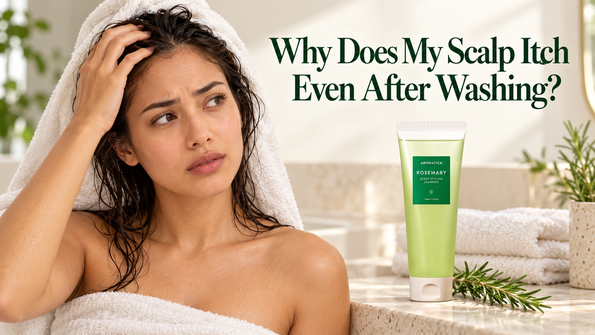
You have just washed your hair. It looks clean, smells fresh, and feels lighter. Then your scalp starts itching again—sometimes before your hair has even dried. and itchy scalp after washing.
An itchy scalp after washing does not necessarily mean you have failed to clean it properly. Leftover shampoo, a reaction to a product, dryness, or dandruff can all be involved. The timing is useful information, but it cannot identify the cause on its own.
Before washing again or reaching for a stronger shampoo, take a closer look at what happens during and after your shower.
This guide explains what to check and where one KoreanShop product—AROMATICA Rosemary Scalp Scaling Shampoo—may fit. Its role is scalp cleansing; whether it helps your itching depends on what is causing it.
What Does an Itchy Scalp After Washing Tell You?
Start with the pattern.
Does the itching begin while the shampoo is still on your scalp? Does it appear after drying? Has it happened for months, or only since you opened a new bottle?
Also notice what comes with it: flakes, redness, a tight feeling, soreness, or changes around your ears and hairline.
| What you notice | What to consider |
|---|---|
| Itching begins with a new product | Possible irritation or allergy |
| Scalp feels uncomfortable after rinsing | Product residue, dryness, or another cause |
| Recurring itch with flakes | Dandruff or another scalp condition |
| Roots feel coated after frequent styling | Product accumulation and washing technique |
| Pain, sores, or patchy hair loss | Professional assessment |
These are clues, rather than a way to diagnose yourself. Several causes can overlap, and flakes alone do not establish which one you have.
1. Shampoo May Be Left on Your Scalp
A quick rinse can be easy to rush, especially around the back of the head or beneath dense hair.
The American Academy of Dermatology notes that shampoo remaining on the scalp can cause irritation. It also identifies reactions to shampoo, conditioner, and other hair products as possible causes of an itchy scalp. AAD guidance on scalp itching
At your next wash, focus on rinsing thoroughly rather than immediately changing products.
Gently separate sections so water can reach the scalp. Check behind your ears, around the hairline, and at the nape of your neck.
More shampoo is not automatically a better clean. Use the amount recommended on the bottle and follow its application instructions.
Conditioner and masks need attention too. Check where the product is meant to be applied and whether it should be rinsed out. A treatment intended for the lengths of your hair should not automatically become a scalp treatment.
2. A Product May Be Irritating Your Skin
If itching started after a new shampoo, dye, conditioner, or styling product, that change matters.
Do not assume discomfort is a sign that a product is “working.” Burning or an itchy rash should not be treated as a normal adjustment period.
Stop using a product you suspect is causing a reaction. If the cause is unclear, a dermatologist can help investigate it.
Keep the rest of your routine familiar while assessing a change. Adding a scalp scrub, oil, and tonic together makes it harder to identify which product is involved.
Words such as “natural,” “botanical,” and “scalp care” do not guarantee that a formula will suit everyone. Aromatic oils and fragrance components still deserve attention, particularly if you have reacted to them before.
3. Dryness Can Make Washing Uncomfortable
A scalp can feel clean and still feel dry.
Some hair-care products can dry or irritate the scalp. Cold weather and low humidity can contribute to dryness too, which is relevant during colder Canadian months.
Dry scalp and dandruff can look similar. Both may involve itching and flakes, but they do not necessarily need the same approach. The AAD distinguishes ordinary scalp dryness from dandruff and recommends assessment when over-the-counter care is not helping. AAD explanation of dry scalp
Review how you wash as well as what you use. Avoid very hot water, aggressive rubbing, and repeated washing intended to remove every trace of oil.
If your scalp becomes more uncomfortable as your cleansing routine becomes more intensive, pause before adding another exfoliating step.
A scalp that feels sore or stripped does not automatically need stronger cleansing.
4. Dandruff May Still Be Present After a Wash
Washing your hair once does not necessarily settle recurring dandruff.
Dandruff can cause flakes and itching. When it is the cause, a suitable anti-dandruff treatment may be more appropriate than repeatedly changing ordinary cosmetic shampoos.
The AAD recommends following the instructions for the specific dandruff shampoo. Some require a contact time before rinsing, and the appropriate frequency depends on the product and hair type. Dermatologist guidance on treating dandruff
Do not borrow a leave-on time from another bottle or assume that using more will work faster.
For Canadian shoppers, a pharmacist can help you choose an appropriate locally available treatment and explain its label.
A cosmetic shampoo containing an exfoliating ingredient is not automatically equivalent to a labelled dandruff medicine. The concentration, formulation, and approved purpose matter.
5. Dry Shampoo and Styling Products May Be Part of the Routine
Dry shampoo can make roots look fresher, but it does not replace washing with shampoo and water.
If you repeatedly use it between washes, review how often it stays on your scalp and how thoroughly you remove it. The AAD explains that dry shampoo can accumulate and recommends regular washing with water and shampoo. AAD advice on dry shampoo
This does not mean every itchy scalp has “buildup.”
Look at your own use of styling products, dry shampoo, and leave-in formulas. If your roots feel coated, a better cleansing technique may be useful. If you have an itchy rash, soreness, or persistent flakes, cleansing alone may not address the cause.
Avoid responding to every symptom with a scrub. Scratching and forceful rubbing can leave an already uncomfortable scalp feeling worse.
One Product to Consider: AROMATICA Rosemary Scalp Scaling Shampoo
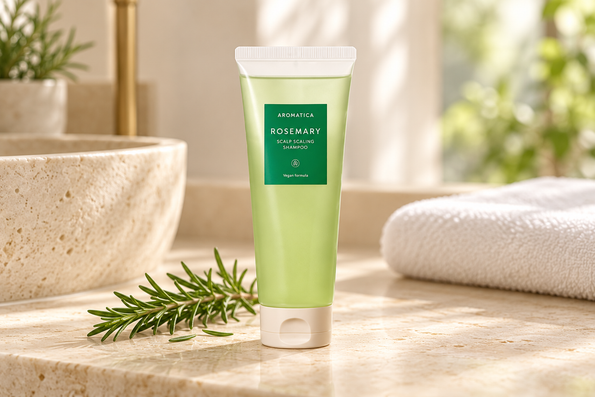
AROMATICA Rosemary Scalp Scaling Shampoo, 180 ml is a scalp-cleansing option available at KoreanShop.
It may be worth considering when you want to review how you remove accumulated oil and hair products. It should not be presented as a solution for every cause of itching.
The brand’s published formula includes cleansing ingredients, salicylic acid, panthenol, rosemary oil, and other aromatic components. Check the ingredient list on the bottle you receive, since versions and formulations can differ.
How Might It Help?
Its most direct role is washing the scalp.
Cleansing ingredients help remove surface oil and product residue. Salicylic acid is an exfoliating ingredient associated with loosening surface scale, although its presence alone does not establish how well this finished shampoo will relieve your symptoms.
If retained products or accumulated oil are contributing to discomfort, effective cleansing and thorough rinsing may help. That is a possible fit for the situation—not proof that this shampoo will stop the itch.
If your scalp is reacting to an ingredient, a differently scented shampoo may not solve the problem. If the cause is dandruff or another skin condition, you may need care chosen for that condition.
Who Should Check the Formula Carefully?
The formula contains aromatic plant oils and lists limonene. Someone who knows these ingredients trigger discomfort should not choose it simply because it contains rosemary.
Similarly, a scalp that is already sore, cracked, or irritated may not be a suitable place to experiment with a scaling shampoo.
Do not describe a tingling or refreshing sensation as proof of healing. Judge the experience by comfort and whether the product suits your needs.
What This Shampoo Cannot Promise
There is no basis here to promise that it will cure persistent itching, treat an allergy, or replace prescribed scalp care.
This product example is based on published information, rather than personal testing or evidence that it treats every condition discussed in this article.
View AROMATICA Rosemary Scalp Scaling Shampoo at KoreanShop
How to Review Your Next Wash
Before introducing a new shampoo, check whether a small change to your technique is enough.
- Look at what changed recently. Note any new shampoo, dye, mask, dry shampoo, or styling product.
- Read the instructions. Check application, contact time, and rinsing directions.
- Wash gently. Use fingertips rather than scratching with your nails.
- Rinse thoroughly. Let water reach the scalp beneath the hair.
- Notice the result. Record whether itching improves, remains the same, or worsens.
If you choose the AROMATICA shampoo, follow its actual packaging instructions. Do not invent a treatment schedule or leave it on for longer because another dandruff shampoo requires several minutes.
Stop if it causes irritation. Increasing frequency is not the answer to a formula that does not suit you.
Should You Wash More Often—or Less Often?
There is no single washing schedule for every itchy scalp.
Hair texture, oiliness, activity, styling habits, and any diagnosed condition can affect the routine. A person using a prescribed or medicated shampoo should follow that treatment plan.
The practical question is whether your current schedule leaves your scalp comfortable and appropriately clean.
If you keep washing because it itches, yet each wash makes it feel worse, get help identifying the cause. If you rely on dry shampoo while avoiding regular washing, reassess that pattern too.
Neither “wash daily” nor “wash only once a week” is a reliable universal answer.
When an Itchy Scalp Needs More Than a Shampoo Change
Get professional advice when itching persists, keeps returning, or does not improve with appropriate care.
Seek assessment sooner for:
- Pain, open sores, pus, or significant crusting.
- Patchy hair loss or broken hairs in affected areas.
- A spreading rash or marked swelling.
- Itching severe enough to disturb sleep.
- Symptoms that worsen despite stopping a suspected product.
Conditions such as seborrhoeic dermatitis, eczema, psoriasis, and scalp infections may need different care. Seborrhoeic dermatitis, for example, can require a treatment plan involving medicated shampoo or other medication. AAD treatment guidance
Sudden facial swelling or breathing difficulty after a hair product requires urgent medical help.
Frequently Asked Questions About an Itchy Scalp After Washing
Does Itching Mean My Hair Is Still Dirty?
No. Residue can contribute, but irritation, dryness, dandruff, and other conditions can also cause itching. Do not assume you need another wash.
Can Shampoo Cause Itching Without Obvious Flakes?
Yes, a product reaction is one possibility. The absence of flakes does not identify the cause or rule out irritation.
Should I Oil My Scalp to Stop the Itch?
Do not assume oil is the right response to every itchy scalp. Adding it may complicate the routine or expose you to another ingredient you do not tolerate. Establish the likely cause first.
Will AROMATICA Shampoo Cure Dandruff?
It should not be promised as a cure. Its potential role here is scalp cleansing. For suspected dandruff, ask a pharmacist or clinician about an appropriate treatment.
Should I Use a Scalp Scrub as Well?
Adding exfoliation is not automatically helpful, particularly if your scalp already feels sore or irritated. Review the existing routine before introducing another product.
How Quickly Should Itching Improve?
That depends on the cause and the care needed. There is no supported universal timeline for this shampoo. Persistent or worsening symptoms should prompt assessment rather than repeated experimentation.
Start With the Cause, Then Choose the Care
An itchy scalp after washing can be frustrating, but it does not mean you need to wash harder.
Check rinsing, recent product changes, dryness, and recurring flakes. Keep the routine straightforward while you work out what is happening.
AROMATICA Rosemary Scalp Scaling Shampoo is one cleansing option to assess if its formula suits you. When itching points to irritation or an underlying condition, choosing the right care matters more than adding another wash.