
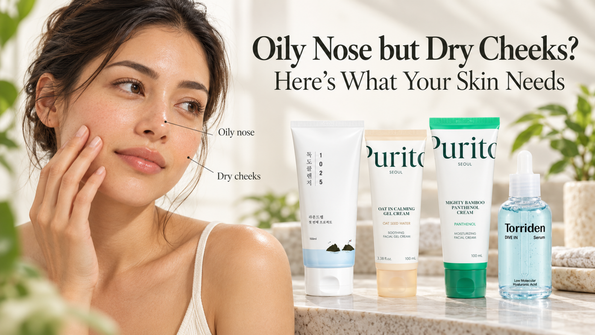
An oily nose and dry cheeks can make choosing skincare frustrating. A cleanser leaves your nose feeling fresh, but your cheeks feel tight. A cream makes your cheeks comfortable, yet your nose looks shiny before lunchtime.
You might wonder whether you have chosen the wrong products—or misunderstood your skin type altogether.
An oily nose with dry cheeks often fits the pattern of combination skin. Different areas of your face can have different needs, so using the same amount of every product everywhere may not feel comfortable.
That does not mean you need two complete routines. Start with a gentle base, then adjust where and how you apply certain products.
Here is how to approach it, with a few KoreanShop options to consider along the way.
Why Can Your Nose Be Oily While Your Cheeks Are Dry?
Combination skin is oily in some areas and dry in others. The oilier area is often the T-zone: your forehead, nose, and chin. Your cheeks may feel normal, dry, or uncomfortable after washing.
The American Academy of Dermatology describes this mixed pattern when discussing how to choose moisturizer. AAD guidance on combination skin
It helps to notice the pattern rather than judge your whole face by its shiniest part.
An oily nose does not automatically mean your cheeks need stronger cleansing. Equally, dry cheeks do not mean you must put a thick layer of cream across every area.
Is It Definitely Combination Skin?
This pattern is a useful starting point, rather than a diagnosis.
Think about whether it is familiar or new. Have your cheeks always felt drier than your nose? Did the dryness begin after adding an exfoliant, changing your cleanser, or starting a treatment?
Persistent redness, itching, burning, or scaling needs more attention than a skin-type label can provide.
For example, flaky skin around the nose and eyebrows can occur with conditions such as seborrhoeic dermatitis. It should not automatically be treated as ordinary dryness. DermNet’s overview of seborrhoeic dermatitis
Oily Nose, Dry Cheeks: Start by Reviewing Your Routine
Before buying another product, take a look at what happens during a normal day.
Notice how your cheeks feel after cleansing, where you apply exfoliating products, and whether dryness appears before or after certain steps.
You do not need a complicated tracking system. A few observations can help:
| What you notice | What to review |
|---|---|
| Cheeks feel tight immediately after washing | Cleanser, water temperature, and washing technique |
| Dryness began after a new treatment | Directions, frequency, and other active products |
| Nose gets shiny but cheeks remain comfortable | Whether you are treating normal shine too aggressively |
| Cream feels heavy only around the nose | Amount and placement of moisturizer |
| Persistent itching, burning, or flaky redness | Whether professional assessment is needed |
The aim is to find a specific adjustment. Replacing everything at once makes it harder to tell what helped.
1. Cleanse Your Whole Face Gently
It is tempting to concentrate on removing every trace of oil from your nose. The problem is that your cheeks go through the same wash.
Use a gentle approach across your face. Avoid scrubbing your nose or repeatedly washing because shine returns during the day.
The AAD recommends gentle cleansing, avoiding scrubbing, and continuing to moisturize even when skin is oily. Dermatologist guidance for oily skin
A cleanser’s name or texture cannot guarantee comfort. What matters is how the formula works for you when used as directed.
Product to Consider: ROUND LAB 1025 Dokdo Cleanser
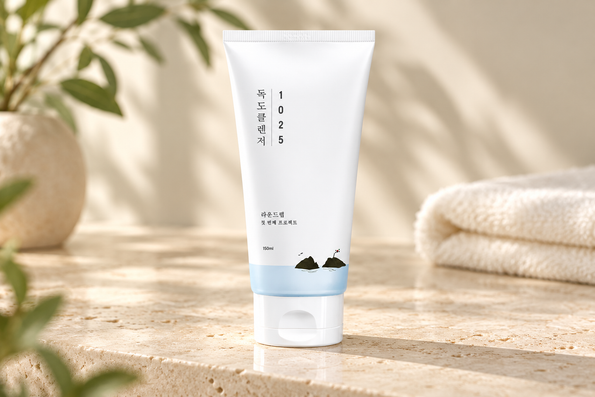
ROUND LAB 1025 Dokdo Cleanser, 150 ml is a creamy foaming option available at KoreanShop.
It is worth comparing if you are reviewing your cleansing step. Check the full ingredient list and current directions before use.
Pay attention to the result after rinsing. If your cheeks consistently feel tight or irritated, do not assume that is an acceptable trade-off for a temporarily matte nose.
You also do not need to keep increasing the amount of cleanser. Follow the label and use a gentle technique.
Explore ROUND LAB cleanser details at KoreanShop
2. Adjust Moisturizer Placement Before Buying Two Creams
When you have an oily nose and dry cheeks, your moisturizer application may need more flexibility than your cleanser.
Start with a moisturizer you tolerate. Apply it according to the directions, then assess where your skin remains uncomfortable and where the finish feels heavier than you prefer.
You may find that your cheeks need a little more attention while your nose feels comfortable with a lighter application.
This is an adjustment to try, rather than a rule that every combination-skinned person needs different amounts.
Product to Consider: PURITO Oat In Calming Gel Cream
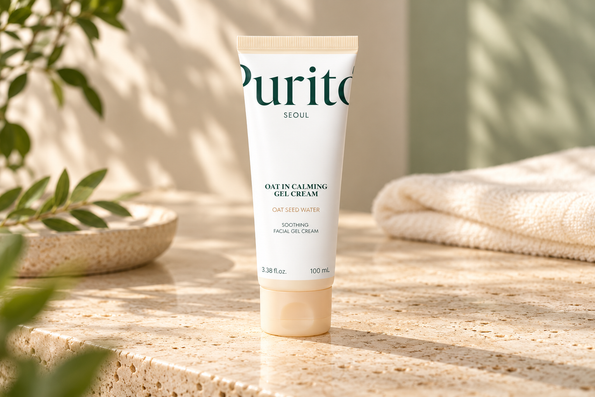
PURITO Oat In Calming Gel Cream is one option if you prefer a gel-cream texture.
Its published formula includes oat seed water, glycerin, squalane, and panthenol. It may be a texture to explore when you want a lighter-feeling moisturizing step.
However, lighter does not automatically mean better. If your cheeks remain dry, you may need a different texture rather than repeated layers of something that is not meeting your needs.
If your current moisturizer already feels comfortable, keep it. You do not need a new product simply because you have identified combination skin.
Browse PURITO products at KoreanShop
3. Give Dry Cheeks Extra Care Where Needed
Sometimes one moisturizer works across the face. Sometimes it does not.
If your nose feels comfortable but your cheeks stay dry, you can consider a separate moisturizer for those areas instead of changing your entire routine.
Keep the decision practical. You are looking for comfortable skin, rather than the richest cream or the longest ingredient list.
Product to Consider: PURITO Mighty Bamboo Panthenol Cream
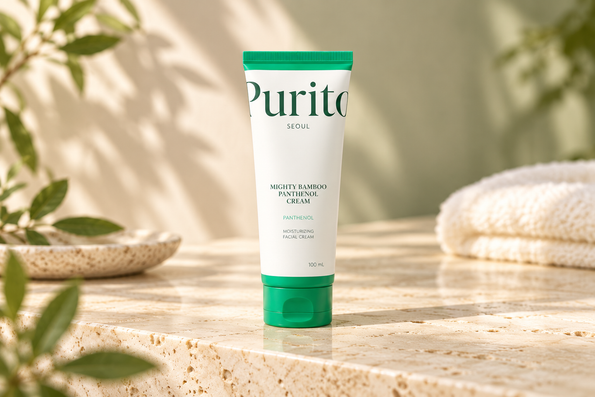
PURITO Mighty Bamboo Panthenol Cream, 100 ml is another moisturizing option available at KoreanShop.
The current published formula contains 10% panthenol, along with squalane and other ingredients. The brand positions it for moisture and skin-barrier care.
If you are comparing it with the Oat In Calming Gel Cream, choose according to the complete formula and your texture preference. You do not need both to follow this guide.
For additional moisture, follow the product’s directions and assess how your skin responds. A higher ingredient percentage does not establish that a cream will suit everyone.
Neither cream should be expected to treat an undiagnosed rash or ongoing irritation.
Browse PURITO moisturizers at KoreanShop
4. Keep a Hydrating Serum Optional
A serum can be useful if you enjoy that step, but it should have a clear role.
For oily nose and dry cheeks, ask whether your basic cleansing and moisturizing routine is comfortable first. If it is not, adding another layer may make the routine more difficult to assess.
If you want to try a hydration serum, introduce one rather than several similar products.
Product to Consider: Torriden DIVE-IN Serum
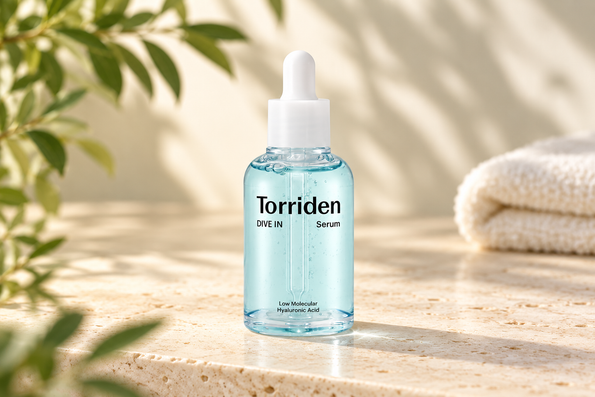
Torriden DIVE-IN Low-Molecular Hyaluronic Acid Serum is a hydration-focused option.
Its published information includes a hyaluronic-acid complex, panthenol, and betaine.
Use it according to the directions and follow with suitable moisturizer. Notice whether the additional step makes your skin feel more comfortable.
If your moisturizer already does what you need, leaving serum out is also reasonable. You do not need to add it as a compulsory treatment for combination skin.
Browse Torriden products at KoreanShop
5. Reconsider Exfoliation Before Adding More
A shiny nose can make exfoliation seem like the obvious next step. Meanwhile, dry patches on the cheeks may tempt you to scrub there too.
Pause before treating both concerns the same way.
Check whether your cleanser, toner, serum, or treatment already contains exfoliating ingredients. Several individually mild products can still create a more intensive routine than you intended.
Follow each product’s instructions. Do not automatically spread an exfoliating treatment across uncomfortable cheeks just because you want to use it around your nose.
If your skin becomes irritated, stop and reassess rather than assuming it needs to adjust. Seek advice about prescribed treatments before changing how you use them.
You also do not need to add an exfoliant solely because your nose is oily.
A Simple Routine for an Oily Nose and Dry Cheeks
Use this as a framework, then follow the directions for your individual products.
Morning
- Cleanse gently as appropriate for your routine. Avoid scrubbing areas that feel dry.
- Use a hydration serum if wanted. This is optional.
- Apply moisturizer. Adjust placement according to comfort and the product directions.
- Apply suitable sunscreen. Follow its label for amount, timing, and reapplication.
Do not reduce sunscreen on your nose just to make it look less shiny. Review the formula or the layers underneath instead.
Evening
- Remove makeup and cleanse as needed.
- Use any existing treatment as directed.
- Apply moisturizer, giving dry areas appropriate attention.
You do not have to use every product mentioned in this article. A cleanser and one suitable moisturizer may be enough for your non-sunscreen basics, with other steps chosen for a clear purpose.
What Can You Do About Midday Shine?
If your cheeks feel comfortable and your main concern is a shiny nose, avoid turning every shiny moment into another face wash.
Blotting paper is one option for temporary shine management. Press gently rather than rubbing it across your face.
Also consider whether what you see is surface oil, the finish of your skincare, or a combination of both. A dewy product finish does not necessarily mean your skin has suddenly become oilier.
If makeup is involved, test changes one at a time. Altering your moisturizer, sunscreen, primer, and foundation together will make the result harder to understand.
Common Mistakes With Oily Nose and Dry Cheeks
Choosing Everything for Oily Skin
Your nose should not make every decision for your cheeks. Review how each area feels before choosing a stronger cleanser or another oil-control step.
Putting the Same Amount Everywhere
An even layer is important for products such as sunscreen when used as directed. Moisturizer application can be assessed more flexibly according to your needs.
Scrubbing Away Flakes
Flaking does not automatically call for more exfoliation. If the area is sore, itchy, or repeatedly flaky, find out what is causing it.
Buying Several New Products Together
Start with one change. Keep the rest of the routine familiar so you can judge the result.
Expecting No Shine at All
Oil is a normal part of skin. Aim for comfort and manageable shine rather than a permanently dry, matte surface.
When to Get Advice
Arrange an assessment if dryness is persistent, painful, or accompanied by a rash, cracking, significant itching, or burning.
Redness and scale around the nose, eyebrows, or scalp may have an explanation beyond combination skin. A clinician can help distinguish routine-related irritation from a condition needing specific care.
A sudden, persistent change also deserves attention, especially if it follows medication or is accompanied by other symptoms.
In those situations, buying another moisturizer should not replace getting the cause checked.
Frequently Asked Questions
Does an Oily Nose With Dry Cheeks Mean Combination Skin?
It often fits that pattern, but it is not enough to diagnose every cause of dryness or oiliness. Consider your history, recent routine changes, and any irritation.
Should I Moisturize My Nose for oily nose dry cheeks?
Oily skin can still need moisturizer. Choose a comfortable formula and follow its directions rather than automatically leaving the area out.
Do I Need Two Moisturizers for oily nose dry cheeks?
Not necessarily. Try a suitable moisturizer first. A second texture is an option if different areas remain uncomfortable, not a requirement.
Should I Wash My Nose More Often Than My Cheeks?
Repeated washing is not the best starting point for managing shine. Keep cleansing gentle and review the routine as a whole.
Can Dry Cheeks and an Oily Nose Change With the Season?
Your skin’s comfort and product preferences may change. Reassess what you need rather than keeping a fixed routine because it worked at another time.
Will These Products Permanently Change My Skin Type?
That is not a reasonable expectation for these cosmetic products. The aim is to choose a routine that keeps your skin comfortable and meets its current needs.
Give Each Area What It Needs
An oily nose and dry cheeks do not require a complicated routine. Start with gentle cleansing, suitable moisturizer, and daytime sun protection. Adjust optional steps only when they serve a clear purpose.