
Your routine started with a cleanser and moisturizer. Then you added a toner for hydration, a serum for dark spots and an exfoliating product for texture. Each purchase had a reason.It’s a too much skincare.
A few months later, your bathroom shelf is full, your sunscreen rolls off, and your cheeks sometimes sting when you apply cream.
If you’re wondering whether you’re using too much skincare, look at how your skin feels and how your products behave together. Regular burning, new flaking, repeated pilling and several products doing the same job are reasons to review your routine.
There is no single product count that suits everyone. The amount you apply, the ingredients you combine and how often you use them all matter. A routine can become difficult to tolerate even when it has only a few steps.
For Canadian readers, the change from warmer weather to cold outdoor air and heated rooms can make these problems more noticeable. The routine you enjoyed in summer may need adjusting once your cheeks start feeling tight.
What Does “Too Much Skincare” Actually Mean?
Using too much skincare can mean applying more than you need at one time. It can also mean using a treatment too frequently, layering several similar products or changing your routine so often that you cannot tell what helps.
Consider an exfoliating cleanser, an acid toner and exfoliating pads. They look like three separate steps, but they may all contribute to exfoliation.
The same overlap can happen with hydrating products. A toner, essence and serum may each feel pleasant, yet you might find that one of them provides enough comfort underneath moisturizer.
Research on elaborate skincare routines remains limited. A study discussing dermatologists’ perspectives highlights concerns about irritation and other unwanted effects from excessive or inappropriate product use. Dermatologists’ Perspectives on Skincare Routine Trends
The practical question is whether each step serves a clear purpose and fits comfortably with the rest of your routine.
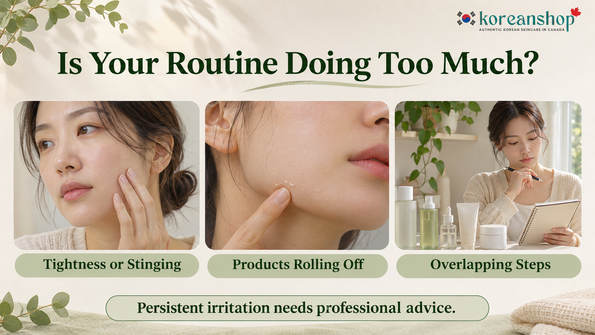
1. Products Start Burning or Stinging
Pay attention if a product that used to feel comfortable begins to sting, especially when your skin also feels sore, itchy or unusually sensitive.
The discomfort could relate to irritation, an allergic reaction or another skin condition. Counting your products alone will not identify the cause.
Think about what changed recently. Did you add an exfoliating toner? Start using a treatment every night? Introduce a new fragrance-containing product?
Stop using a suspected cosmetic product if it causes a reaction. A persistent itchy rash deserves assessment because skincare products can cause contact dermatitis. American Academy of Dermatology guidance on contact dermatitis
Avoid adding another treatment to fix the discomfort immediately. First, give yourself a clear picture of what you were using when the reaction began.
If a prescribed product is involved, contact your prescriber for advice about adjusting the plan.
2. Your Skin Feels Tight or Starts Flaking
You may notice tightness after washing, roughness around your mouth or flakes that were not there before.
These changes are worth reviewing alongside your cleansing and exfoliation habits. Look at the full week rather than only the products you used that morning.
For example, your routine might include a scrub on Sunday, exfoliating pads on Monday and an acid serum on Tuesday. Spacing products across different days can still add up to frequent exfoliation.
The AAD advises considering the products you already use before exfoliating because some treatments can make skin more sensitive. Exfoliation should suit your skin and should be avoided on damaged or sunburned areas. AAD guide to safe exfoliation
If flakes appear, pause optional exfoliation and reassess how your skin feels with gentle care. Scrubbing the flakes away may leave the area more uncomfortable.
3. Your Skincare Keeps Rolling Off
Small rolls around your jaw or hairline can appear when you spread sunscreen or foundation.
This is often called pilling. It can happen when you apply a heavy amount, rub repeatedly or use layers that do not sit well together.
Pilling is a reason to check your application. It does not establish that your skin is irritated.
Try the same moisturizer and sunscreen together with fewer optional layers underneath. Give the moisturizer time to settle and spread sunscreen gently.
Keep the sunscreen amount consistent with its label directions. Adjust optional skincare layers first.
Our guide explains how to distinguish product rolling from dry skin flakes and identify where it starts. Read about moisturizer pilling
4. Several Products Are Doing the Same Job
Place your products on a table and write down why you use each one.
You might have three products for hydration, two for exfoliation and several aimed at brightening. Some combinations can fit a planned routine, but overlap can also make it harder to know what you actually need.
A useful test is whether you can describe the purpose of a product in one simple sentence.
“I use this moisturizer because my cheeks feel tight after washing” gives you something to assess.
“I bought this because everyone was using it” gives you a reason to pause before repurchasing.
Check ingredient lists and directions as well as product names. A toner can contain exfoliating ingredients, and a serum may include ingredients you already use elsewhere.
A study of skincare routines shown on TikTok found repeated use of the same active ingredients across different products, which could increase irritation risk. The study focused on children and adolescents, so its findings should be understood in that context. Pediatrics study on TikTok skincare routines
5. You Keep Adding Products to Fix New Problems
One serum leaves your skin feeling dry, so you add a richer cream. The cream feels heavy under sunscreen, so you buy a primer. Your makeup then pills, and you start looking for another foundation.
At that point, it helps to return to the first change.
When did your skin last feel comfortable? What did you add after that? Was the original product being used according to its directions?
Write down the order of changes before buying anything else. You may find one clear point where the routine became difficult to manage.
Makeup can also help you notice patterns. If foundation catches on newly rough cheeks, review your skin preparation and the amount of makeup you apply. Read our winter makeup guide
6. You Change Treatments Before You Can Assess Them
It is easy to become impatient when a new product does not produce a visible change quickly.
But switching acne treatments every few days can introduce irritation and make the results difficult to interpret.
The AAD recommends giving appropriate acne treatments time to work, often six to eight weeks before assessing early improvement. Follow the product directions or your clinician’s plan. Seek advice sooner if treatment causes troublesome side effects. AAD guide to habits that can worsen acne
That timeline applies to suitable acne treatment. You should stop a cosmetic product that causes a reaction rather than continuing simply to complete a trial period.
Keep a short note of when you start a product and how often you use it. A simple record is easier to trust than trying to remember which serum was introduced first.
A Quick Check for Too Much Skincare
| What you notice | What to review |
|---|---|
| Burning, itching or a new rash | Recent additions and possible reactions |
| Tightness or new flaking | Cleansing, exfoliation and treatment frequency |
| Little rolls during sunscreen application | Layering, product amounts and repeated rubbing |
| A heavy coating that feels uncomfortable | Optional layers and moisturizer placement |
| Several products with similar purposes | Ingredients and whether every step is needed |
| Constant routine changes | Start dates, directions and time to assess results |
These observations help you decide what to review. Persistent symptoms may need professional assessment.
How to Simplify Your Skincare Routine
Start by writing down what you use
Include products you use occasionally, such as peeling masks, scrubs and spot treatments.
Record how often you use them and whether they are prescribed. This makes overlapping steps easier to see.
Separate prescribed treatment from optional cosmetic products so you can discuss any treatment changes with your healthcare professional.
Pause optional steps that may be contributing
If your skin has become uncomfortable, review recent additions first. Avoid continuing to add new products while trying to work out the cause.
A cosmetic product that repeatedly causes itching, burning or a rash should be stopped and assessed as needed.
You do not need to test a product again at home after a significant reaction. A dermatologist can advise whether formal allergy testing is appropriate.
Keep cleansing gentle
Use lukewarm water and a cleanser your skin tolerates. Apply it with your fingertips and avoid scrubbing rough areas.
Pay attention to how your face feels before you apply the next product. Immediate tightness after every wash is a reason to review that step.
Choose a moisturizer that feels comfortable
A light lotion may suit your forehead while your cheeks prefer a little more moisture.
You can adjust placement instead of applying every product equally across your face. Check comfort later in the day, especially if you spend hours in heated rooms.
Keep sunscreen in your morning routine
Use broad-spectrum SPF 30 or higher and apply generously and evenly according to the label.
Health Canada recommends applying sunscreen at least 15 minutes before going outside and reapplying at least every two hours during sun exposure. Follow the label after swimming, sweating or towel drying. Health Canada sunscreen guidance
What Could a Simpler Routine Look Like?
| Time | A practical starting routine |
|---|---|
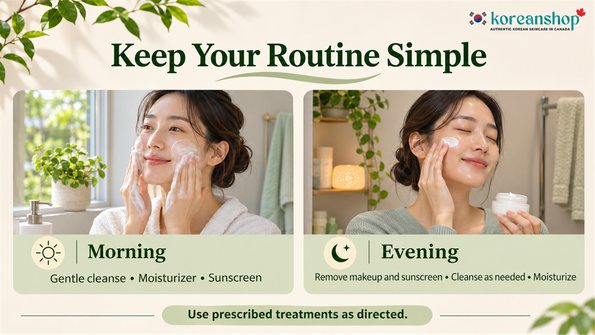
| Morning | Gentle cleansing as needed, moisturizer suited to your skin and sunscreen |
| Evening | Gentle removal of makeup and sunscreen, cleansing as needed and moisturizer |
| Prescribed treatment | Continue according to your treatment plan and ask your prescriber about side effects |
Optional toner, essence, serum or masks can be reconsidered once your skin feels comfortable.
You may decide to keep a product because you enjoy it and it fits well. You may also find that you do not miss a step after leaving it out.
The result should be a routine you can explain and follow without constantly correcting how your skin feels.
How to Add a Product Back Carefully
Introduce one product at a time so you can observe its effect.
Check the instructions first. A product intended for occasional use may cause problems if you apply it every morning and evening.
For suitable cosmetic products, the AAD describes testing a small area twice daily for seven to ten days, following the product’s directions for contact time. Stop if a reaction develops. A successful home test cannot guarantee that a product will suit every area of your face. AAD guide to testing skincare products
Once you introduce it into your routine, notice comfort as well as appearance. Ask whether it adds something useful and whether it affects sunscreen or makeup application.
Does Korean Skincare Require a Long Routine?
You can build a Korean skincare routine around a few products that meet your needs.
A toner, essence, ampoule and serum are separate formats. Owning one of each does not tell you whether the combination suits your skin.
When browsing KoreanShop, choose the step you need first. If cleansing is comfortable but moisturizer leaves your cheeks tight, focus on moisturizer rather than buying a complete set. Browse KoreanShop
For oily skin, assess your forehead and cheeks separately. A shiny nose can sit alongside dry areas, especially when weather and indoor conditions change.
When Should You Seek Professional Advice?
Get advice if burning, itching, cracking or a rash persists despite simplifying your routine, or if reactions keep returning.
Seek prompt care for marked swelling, blistering, severe pain or signs of infection. Sudden swelling of the lips or tongue, or breathing difficulty, needs emergency care.
In Canada, a family doctor or nurse practitioner can assess persistent symptoms. A pharmacist may also help you review non-prescription products and directions.
Bring a product list and, if possible, photographs showing when the reaction began. This gives the clinician more context than a general description of “sensitive skin.”
Frequently Asked Questions
How many skincare products are too many?
There is no fixed number. Review whether products overlap, how frequently you use them and whether your skin remains comfortable. Even a short routine can include a product that irritates you.
Can too much skincare cause breakouts?
Some products can contribute to breakouts, and irritation can complicate the picture. If acne worsens after adding something new, review the timing and seek advice if it persists. AAD acne-care guidance
Should I stop every product if my skin stings?
Stop the suspected cosmetic product and simplify optional steps. Contact your prescriber about prescribed treatment. Persistent stinging or a rash needs assessment.
Do I need to replace everything with products for sensitive skin?
Start by identifying the step causing trouble. Product labels can help you compare formulas, but your response to the formula matters. Replacing everything at once makes it harder to understand what helped.
Will using less moisturizer fix pilling?
It may help if the layer is heavier than you need. You can also test fewer optional products underneath, allow settling time and reduce repeated rubbing. Keep sunscreen application consistent with its directions.
Tonight, look at your products and write one purpose beside each. If several serve the same purpose, choose one optional step to review. Tomorrow, notice how your skin feels after washing, after moisturizing and once sunscreen settles. Those observations can guide the next change.