
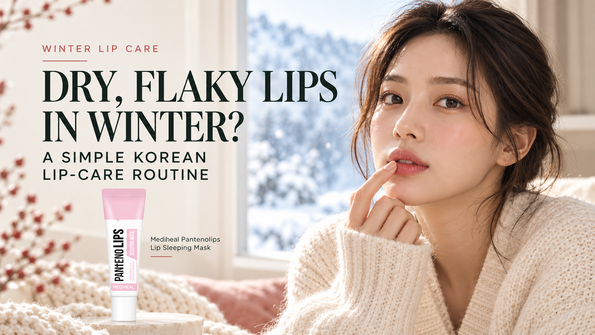
When Canadian winter arrives, your lips may be the first place you notice it. They feel tight after you come in from the cold, lipstick catches on dry patches, and your lip balm seems to disappear almost as soon as you apply it.Dry, flaky lips in winter are common in Canada, especially when cold outdoor air meets dry indoor heating.
A few simple habits can make dry flaky lips in winter easier to manage.
If this sounds familiar, you probably don’t need a complicated routine. Cold air, wind and dry indoor heating can all leave lips feeling uncomfortable. Licking or picking at them—and using products that sting—can make the dryness worse.
The best place to start is a simple routine: protect your lips during the day, use a comfortable moisturizing product when they feel dry, and add a nourishing lip mask at night only if your lips tolerate it.
Why do lips get so dry in winter?
Your lips are exposed to cold air and wind, but they don’t have the same protective surface as the skin on the rest of your face. When the air gets cold and dry, lips can lose moisture and start to feel rough, tight or flaky. Indoor heating can add to the dryness.
Other everyday habits may contribute too:
- Licking your lips: It may feel soothing for a moment, but as saliva dries, your lips can feel even drier.
- Picking or biting flaky skin: This can irritate lips and keep them from feeling comfortable.
- Using products that sting: A burning, tingling or cooling sensation doesn’t mean a lip product is working. It may be irritating your lips.
- Exfoliating too often: Scrubs and rubbing can be uncomfortable when lips are already cracked or sensitive.
- Not protecting lips outdoors: Cold wind and winter sun can both affect exposed skin. A scarf and a lip balm with SPF can help protect your lips when you go outside.
The American Academy of Dermatology recommends avoiding lip products that irritate chapped lips, applying a suitable moisturizer regularly, and using lip balm with SPF 30 or higher outdoors. (AAD: Tips for healing dry, chapped lips)
Signs your lips may need a simpler routine
Winter lip dryness can show up in a few ways:
- Lips feel tight, especially after washing your face or going outdoors.
- Lipstick or lip tint settles into rough patches.
- Your lips look flaky or feel rough to the touch.
- Balm seems to help briefly, but the dryness returns.
- A lip product causes burning, stinging or itching.
If a product makes your lips uncomfortable, stop using it and switch to something that feels soothing. More products—and more exfoliation—aren’t always the answer.
A Simple Korean Lip-Care Routine for Dry, Flaky Lips in Winter
Korean skincare is often associated with several steps, but winter lip care can stay simple. Think comfort, moisture and protection rather than layering lots of products.
Morning: moisturize and protect
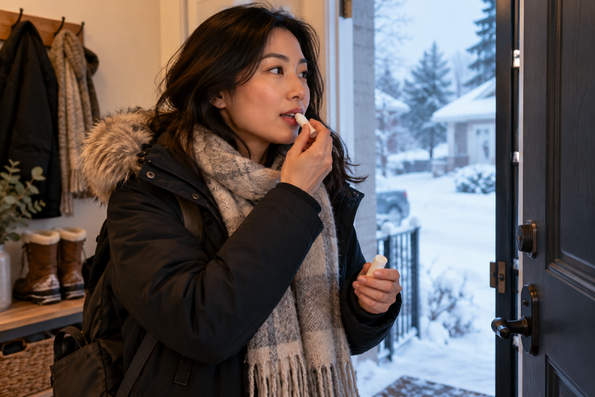
After brushing your teeth and washing your face, apply a lip balm that feels comfortable. If you’ll be outdoors, choose a lip balm with SPF 30 or higher and reapply it as directed, especially after eating or drinking.
On especially cold or windy days, pull a scarf over your lips when you’re outside. Canada’s extreme-cold guidance also recommends using protective lip balm in cold conditions. (Health Canada: Extreme cold)
During the day: reapply when your lips feel dry
Keep your lip balm nearby and apply it when your lips start to feel tight. Try to avoid licking or peeling flakes. If your lips feel dry indoors, a humidifier in your bedroom may help add moisture to the air.
Evening: remove makeup gently
If you’ve worn lipstick or lip tint, remove it gently with a soft cloth or a suitable cleanser. Avoid scrubbing your lips or pulling at loose skin. Pat them dry, then apply a moisturizing lip product that doesn’t sting.
Before bed: add a lip mask if it suits you
A lip sleeping mask can be a convenient final step for someone who likes a richer-feeling product at night. Apply a thin, comfortable layer and follow the product directions. If your lips are very cracked or easily irritated, keep the routine extra simple and choose a product that doesn’t cause discomfort.
A Korean lip-care product to consider
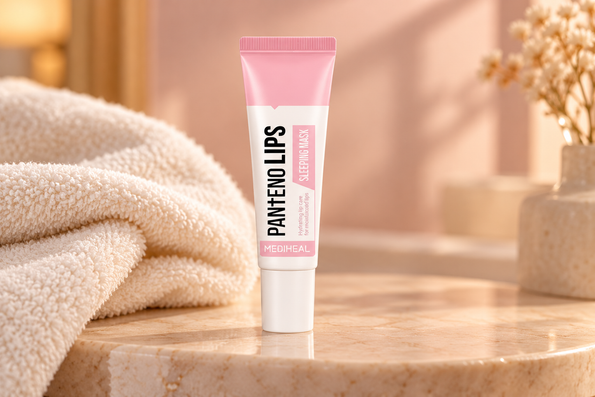
If you’d like to add a Korean lip product to your evening routine, Korean Shop carries the Mediheal Pantenolips Lip Sleeping Mask 10ml. The product listing describes it as a gel-textured overnight lip mask with panthenol, sodium hyaluronate, shea butter and several oils.
One detail to check before using it: the listed ingredients include fragrance. Fragrance doesn’t bother everyone, but very dry or sensitive lips may react differently. If your lips are currently cracked or stinging, choose a fragrance-free product that feels comfortable instead. Stop using any lip product that causes burning, stinging or irritation.
A lip sleeping mask is an optional cosmetic step. It does not replace daytime SPF lip balm, and it won’t work the same way for everyone.
What to avoid when lips are flaky
While your lips are irritated, pause anything that makes them feel worse. This may include:
- Lip scrubs, toothbrush exfoliation or peeling flakes by hand
- Lip products that sting or tingle
- Strongly fragranced or flavoured products
- Products with menthol, camphor, eucalyptus, peppermint or cinnamon
- Repeatedly licking or biting your lips
Some of these ingredients may be fine for other people or when lips feel comfortable. But if your lips are already chapped, the AAD recommends stopping products that irritate them and choosing non-irritating care instead. (AAD: Ingredients and care for chapped lips)
Common winter lip-care mistakes
Scrubbing away flakes
It’s tempting to scrub rough skin off, especially before applying lipstick. But rubbing or picking can irritate your lips further. Focus on comfortable moisture and let loose flakes come away naturally.
Expecting a lip mask to replace daytime care
A nighttime mask can be part of your routine, but your lips still need protection during the day—especially outdoors. For daytime winter use, consider a lip balm with SPF 30 or higher.
Trying several new lip products at once
If you introduce multiple products together and your lips react, it may be hard to identify the cause. Try one new product at a time and stop if it causes discomfort.
Continuing to use a product because it tingles
Tingling is not proof that a lip product is working. If it burns or stings, discontinue it and use a product that feels comfortable.
For dry flaky lips in winter, consistent daytime protection and a comfortable nighttime moisturizer may be easier than frequent exfoliation.
When should you ask a health professional?
Ordinary winter chapping often improves with consistent, gentle care. If your lips aren’t improving after two to three weeks, or if you have persistent cracking, swelling, rash or significant discomfort, contact a healthcare professional. Dry or scaly lips can sometimes have causes beyond cold weather, and a clinician can help assess them. (AAD: When to seek care for chapped lips)
Frequently asked questions
How often should I apply lip balm in winter?
Apply it whenever your lips feel dry and before going outdoors. For outdoor sun exposure, use an SPF lip balm as directed on its label.
Should I exfoliate flaky lips?
It’s usually better to avoid scrubbing or pulling at flakes while lips are irritated. Keep your routine gentle and use products that don’t sting.
Can I use a Korean lip sleeping mask every night?
Follow the product directions and pay attention to how your lips respond. If a mask causes stinging, itching or irritation, stop using it. A nighttime mask is optional; a simple product that feels comfortable may suit you better.
Does drinking more water fix dry lips?
Staying hydrated is good for your general health, but winter lip dryness can also be affected by cold air, wind, indoor heating, licking your lips and irritating products. Lip care and outdoor protection matter too.
Keep your winter lip routine simple
Dry, flaky lips in winter don’t always need a complicated fix. Start with a comfortable lip balm, protect your lips from cold air and winter sun, and avoid licking, scrubbing or using products that sting. If you enjoy a nighttime lip mask, add one that feels comfortable and check its ingredient list—especially if your lips are sensitive.
With Dry flaky lips in winter, consistent daytime protection and a comfortable nighttime moisturizer are a practical place to start.
Small, consistent steps can make winter lip care easier. If the dryness persists or becomes uncomfortable, ask a healthcare professional for advice.