
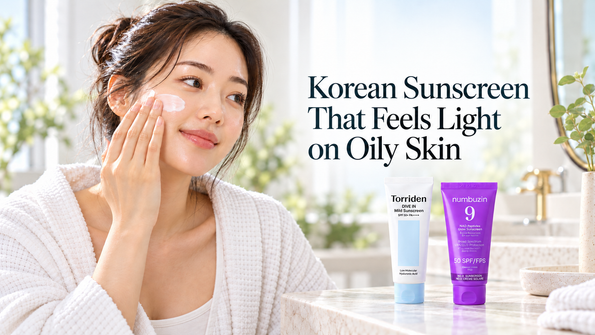
If you have oily skin, sunscreen can feel like the last step you want to add in the morning. Maybe your forehead already looks shiny by lunchtime, or your usual SPF feels sticky once you apply enough of it. You might even have a sunscreen you like at first, only to find it starts to feel heavy once you put moisturizer and makeup over it.
That doesn’t mean sunscreen is optional. It means the texture and finish matter to you—and that’s a reasonable thing to consider when choosing a product.
When looking for a Korean sunscreen for oily skin, start with the kind of finish you enjoy wearing, the label information, and how the product feels on your own face. Some people like a natural or matte look. Others are comfortable with a soft glow. There isn’t one finish that works for every person with oily skin.
This guide explains what to look for, how to make sunscreen more comfortable to wear, and how two KoreanShop options differ: Torriden DIVE IN Mild Sunscreen and Numbuzin No.9 NAD Peptide Glow Sunscreen.
Why sunscreen can feel different on oily skin
Oily skin produces more sebum, but that doesn’t mean every product will feel greasy—or that your skin never needs moisture. You may prefer a lighter product in the morning, especially if you layer several skincare steps or wear makeup.
A sunscreen can feel heavy for a few different reasons:
- Its finish is more dewy than you like.
- You applied it over several rich or slow-drying products.
- It hasn’t had time to settle before you add makeup.
- The texture doesn’t suit your personal preference.
- Your skin is oily in some areas but dry or tight in others.
The product label can help you understand what the brand is aiming for, but it can’t promise how the formula will feel on your skin. “Lightweight,” “matte,” and “glowy” are useful clues—not a guarantee that everyone will experience the same finish.
It also helps to separate shine from sun protection. If you dislike a shiny finish, choosing a different texture may help you feel more comfortable. Applying less sunscreen is not a good way to make it less shiny, because the amount you use affects the protection you get.
What to look for in a Korean sunscreen for oily skin
1. Decide what finish you prefer
Before comparing products, decide whether you want a matte, natural, or dewy finish.
A matte finish may be more appealing if shine is your main concern. A natural finish can still have a little glow without feeling as glossy. A dewy finish may suit you if you enjoy a hydrated look, but it may appear shinier on some oily skin.
Try describing what you want in everyday terms: “I want my face to look less shiny,” “I don’t want it to feel sticky,” or “I’m fine with glow as long as it doesn’t feel heavy.” That makes product descriptions easier to compare.
2. Check how the formula is described
Look for words such as lightweight, non-sticky, natural finish, or matte finish if those are priorities for you. If you prefer glow, a product described as radiant or dewy may be a better match.
These descriptions come from the brand or retailer, so treat them as a starting point. They don’t replace trying a product yourself. Reviews can provide more context, especially if people describe their skin type and the finish they noticed.
3. Read the sunscreen label
For daily sun protection, Health Canada recommends choosing a broad-spectrum sunscreen with SPF 30 or higher. Broad spectrum means the product is labelled to protect against both UVA and UVB rays. Follow the directions on the Canadian package you receive, as sunscreen instructions can vary between products and versions. Health Canada: Sunscreens
If you are shopping in Canada, check the Canadian product information and label. Depending on its active ingredients, a sunscreen may be regulated in Canada as a non-prescription drug or a natural health product. Product pages may show an NPN or DIN; check the specific product’s package and current details.
4. Look for claims that matter to your skin
If you are acne-prone, terms like oil-free or non-comedogenic may help you narrow your choices when those claims are available. They don’t guarantee that a product will suit every person, but they can be useful details to check.
If your skin is sensitive, check the full ingredient list and try a small-area test before regular use. Health Canada recommends testing a new sunscreen on a small area, particularly for people with sensitive skin. Stop using it if you develop a rash or itching. Health Canada: Sunscreens
5. Think about what you’ll wear underneath it
A sunscreen can feel heavier if it is layered over several moisturizers, essences, or serums. You may not need every step each morning. Try a simpler routine: cleanser if needed, a moisturizer that feels comfortable, and sunscreen.
If the product pills or rolls when you apply it, try using fewer layers underneath and give each layer some time to settle. That can make a difference without reducing the amount of sunscreen.
Two KoreanShop sunscreens with different finishes
These products are examples to compare, not a promise that either one will suit every oily skin type. Their descriptions below reflect the product information currently shown by KoreanShop; check the Korean sunscreen.
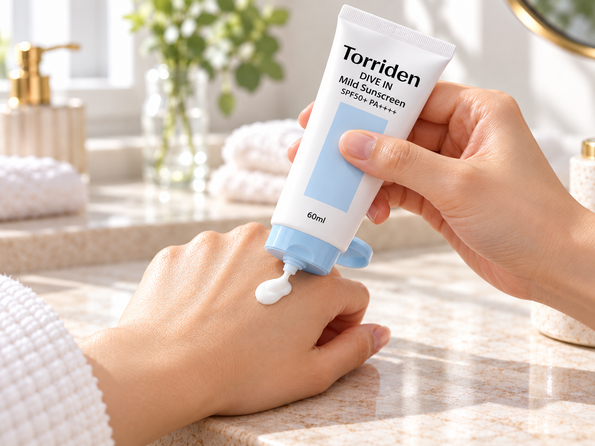
Torriden DIVE IN Mild Sunscreen: a natural-matte option
Torriden DIVE IN Mild Sunscreen SPF50+ is listed at KoreanShop as a mineral sunscreen with zinc oxide. The product page describes its finish as natural matte and non-sticky. It also lists hyaluronic acids, panthenol, and allantoin among its ingredients.
That makes Torriden an option to consider if you prefer a less dewy finish. The page also lists an NPN for this product. If you have not tried it before, remember that “matte” is a product description, not a guarantee that your face will look completely shine-free. Your result can depend on your skin, the skincare underneath, and how the sunscreen settles.
Numbuzin No.9 NAD Peptide Glow Sunscreen: a glow-focused option
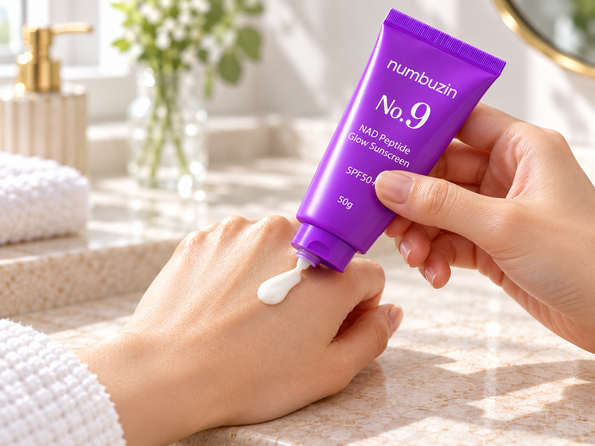
If you like a fresh, radiant finish, compare it with Numbuzin No.9 NAD Peptide Glow Sunscreen SPF50+. KoreanShop lists this as the Canadian version and shows DIN 02565048 on the product page. Its description calls the formula lightweight and non-sticky, with a radiant finish and no visible white cast.
The word “glow” is important here. This is the dewy option in this comparison, not the matte one. If you enjoy a luminous finish, you may prefer this style. If you find that glow makes your face look too shiny, Torriden’s natural-matte description may sound closer to what you want.
You can also browse KoreanShop’s sunscreen selection to see what is currently available. Product stock, packaging, and descriptions may change, so check the current listing and the label on the sunscreen you receive.
Is mineral sunscreen automatically better for oily skin?
No single sunscreen type is automatically the right choice for everyone with oily skin. The Torriden product above is listed as mineral, while Numbuzin has a different formula and a glow-focused finish. Those details help you compare the products, but they don’t predict perfectly how either one will feel on your face.
Rather than choosing based only on the word “mineral” or “Korean,” look at the actual product information: its SPF and broad-spectrum label, the finish it describes, its Canadian product details, and how it feels when applied as directed.
If you already know you prefer mineral sunscreens, that may guide your search. If you have had reactions to particular filters or ingredients, check the ingredient list and ask a health professional for advice when needed.
How to apply Korean sunscreen for oily skin without making your routine feel heavy
A comfortable routine doesn’t need to be complicated. Try these steps in the morning:
- Cleanse gently. Wash your face without scrubbing. If your skin feels comfortable with a water rinse in the morning, you may prefer that to adding another cleanser.
- Keep the next steps simple. Use only the serum or moisturizer you need. If moisturizer is part of your routine, choose one that feels comfortable under sunscreen.
- Let skincare settle. Give your moisturizer a little time to absorb before applying SPF.
- Apply sunscreen evenly. Use the amount and application instructions on the package. Cover exposed areas, including your face and neck.
- Give it a moment before makeup. Let sunscreen settle before applying foundation or other makeup. If makeup pills, try reducing the number of layers underneath.
- Reapply as directed. If you’re outside, follow the package directions for reapplication. Don’t assume one morning application will last all day.
Health Canada recommends applying sunscreen generously and evenly at least 15 minutes before going out and reapplying at least every two hours during sun exposure. You may need to reapply more often after swimming, sweating, or towelling off. Health Canada: Sunscreens
What if sunscreen still looks shiny?
A little shine does not necessarily mean the sunscreen is failing. It may simply be the finish of the product, or the way it looks with the skincare underneath. Here are a few adjustments you can try:
- Use fewer layers underneath. A serum, essence, moisturizer, and sunscreen may feel like too much together. Try simplifying your morning routine.
- Wait between steps. Applying each product before the previous layer has settled can make the layers feel slippery or cause pilling.
- Compare finishes. If you’re currently using a dewy sunscreen and don’t like the look, try a product described as natural or matte.
- Notice how it feels, not just how it looks. Some people are comfortable with a glow, while others prefer a less shiny finish.
- Don’t reduce the amount of SPF. If a product only feels comfortable when you use too little, it may not be the right formula for you.
A small change in the products underneath can help, but you shouldn’t have to tolerate a sunscreen that consistently feels unpleasant. Try another formula that matches your preferred finish.
Common sunscreen questions for oily skin
Does oily skin still need Korean sunscreen?
Yes. Oily skin does not remove the need for sun protection. Health Canada recommends broad-spectrum SPF 30 or higher, applied according to the product directions. Health Canada: Sunscreens
Should I choose a matte sunscreen if I have oily skin?
Only if you like a matte finish. It may be worth trying if shine bothers you, but a matte label does not guarantee a particular result for every person. Some people with oily skin prefer a natural or dewy finish instead.
Is a dewy sunscreen always too shiny for oily skin?
No. A dewy finish may look shinier on some people, but others enjoy how it looks and feels. Numbuzin No.9 NAD Peptide Glow Sunscreen is described by KoreanShop as glow-focused; consider that finish when deciding whether it matches your preference.
Is mineral sunscreen the best choice for oily or acne-prone skin?
There is no universal answer. A mineral sunscreen may be what you prefer, but the formula’s finish and how your skin responds also matter. Check the product label and ingredient list, and choose a sunscreen you can wear as directed.
Can I wear moisturizer under sunscreen if my skin is oily?
You may be able to. The American Academy of Dermatology notes that moisturizer can help when acne treatments dry or irritate the skin. If your sunscreen feels heavy, try simplifying the layers underneath and use a moisturizer that feels comfortable to you. AAD: Moisturizer and acne-prone skin
How much sunscreen should I use?
Follow the application directions on the Canadian package. Applying too little can reduce the protection you get. Health Canada’s sunscreen guidance gives an adult amount of about one teaspoon for the face and neck as part of its full-body application example. Health Canada: Sunscreens
How often should I reapply?
Follow the product label. Health Canada advises reapplying at least every two hours during sun exposure and more often after swimming, sweating, or towelling off. Health Canada: Sunscreens