
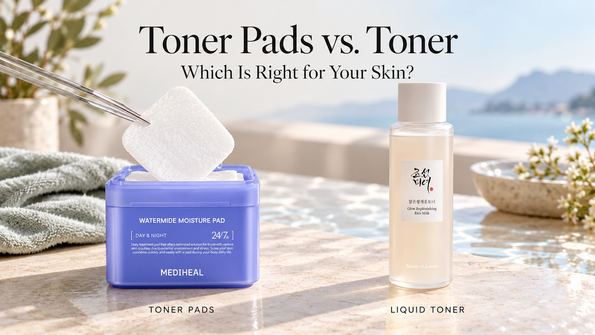
Toner pads vs toner—which one belongs in your skincare routine? Toner pads offer a pre-soaked, ready-to-use format, while liquid toner lets you control the amount and apply it with your hands or a separate cotton pad. Either format can provide hydration or deliver other skincare ingredients, depending on the formula.
If you have been browsing Korean skincare in Canada, you have probably seen toner pads vs toner both options sitting beside each other. One comes in a jar filled with pads. The other comes in a bottle, sometimes with a watery texture and sometimes with a milky finish.
It is easy to assume that toner pads are stronger, that liquid toner is always gentler, or that you need toner pads vs toner both for a complete routine. However, those assumptions overlook the most important part: what is actually inside the product.
This guide explains the differences, how to choose for your skin type, and where each option fits into a practical Korean skincare routine.
Toner Pads vs. Toner: The Quick Comparison
If you want a quick starting point, choose toner pads for the convenience of a pre-soaked format and liquid toner for flexible dosing and the option to apply without wiping.
Neither format is automatically better. Compare the formula, application method, and instructions before deciding.
| What to compare | Toner pads | Liquid toner |
|---|---|---|
| Packaging | Pads soaked in formula inside a container | Formula supplied in a bottle |
| Application | Swipe gently or place on skin when directed | Press on with clean hands or use a separate pad |
| Amount | Depends on how much formula each pad holds | Adjust the amount you pour |
| Texture | Depends on the liquid and pad material | Can be watery, viscous, or milky |
| Exfoliation | Some formulas exfoliate; others focus on hydration | Some formulas exfoliate; others focus on hydration |
| Skin contact | Pad touches the skin during application | Hands can apply the formula without a wiping motion |
| Targeted use | Some products allow brief placement on selected areas | Usually applied across the desired area |
| Disposable materials | A used pad is discarded after application | Hand application does not require a disposable pad |
| Main buying consideration | Formula, pad texture, and usage directions | Formula, texture, and dispensing method |
The key question is not simply “Which format is more popular?” It is “Which formula and application method fit my skin and my existing routine?”
What Are Toner Pads?
Toner pads are pieces of fabric supplied pre-soaked in a skincare formula. They are commonly used after cleansing, although you should follow the instructions on the specific product.
Some pads are round, while others are square or shaped to sit on the cheeks. Some have a textured surface, and others feel smooth.
The formula may focus on hydration, exfoliation, or another cosmetic concern. This is why the words “toner pad” alone do not tell you everything you need to know.
Hydrating Toner Pads
Hydrating toner pads are designed primarily to add moisture to the skin’s surface. They may appeal to people who enjoy a ready-to-use step or a brief targeted application.
However, a hydrating product is not automatically suitable for every person with dry or sensitive skin. Check the full ingredient list and how your skin responds.
Exfoliating Toner Pads
Exfoliating pads may contain ingredients such as AHAs, BHAs, or PHAs. A textured pad can also add friction during application.
For example, Anua’s official description of its Heartleaf 77 Clear Pad identifies PHA in the formula and describes different uses for its embossed and smooth sides. This illustrates why checking the individual product matters. Anua’s official product details
Do not assume every Korean toner pad exfoliates or that every exfoliating pad should be used at the same frequency.
Pads Used as a Targeted Treatment
Some toner pads can be placed on selected areas for a short period, following their directions.
That does not mean every pad can be used this way. Avoid turning an exfoliating pad into a prolonged treatment unless the manufacturer explicitly instructs you to do so.
What Is Liquid Toner?
Liquid toner is a skincare formula supplied in a bottle. Depending on the product directions, you can apply it with clean hands or a separate cotton pad.
The texture can range from almost water-like to noticeably milky or slightly thicker.
A liquid toner may be designed to hydrate, exfoliate, or deliver other cosmetic ingredients. Just as with pads, you need to read beyond the product category.
Watery Toners
Watery toners may appeal to people who prefer a light-feeling application. They can be easy to spread, although the formula determines how they feel once applied.
A clear, watery appearance does not prove that a product is mild, fragrance-free, or suitable for sensitive skin.
Milky Toners
Milky toners have an opaque appearance and may feel different from a watery formula. Some people enjoy this texture when they want a more cushioned application.
However, “milky” does not automatically mean heavy, and it does not mean the toner replaces moisturizer.
Exfoliating Liquid Toners
A bottled toner can also contain exfoliating ingredients. Choosing a liquid format does not remove the need to consider frequency, other active products, or irritation.
A useful rule is to compare the purpose of the formula before comparing the packaging.
Does the Formula Matter More Than the Format?
Yes—the formula is usually a more useful starting point than whether the product comes in a jar or bottle.
Two toner pads can have very different purposes. Two liquid toners can also feel and perform differently.
When comparing toner pads and liquid toner, review these four things.
1. The Main Purpose
Is the product intended mainly for hydration, exfoliation, or another cosmetic concern?
If you want a comfortable hydration step, an exfoliating product may not be the most direct answer, regardless of its packaging.
2. The Ingredient List
Look at the complete formula rather than choosing based on one highlighted ingredient.
A familiar ingredient on the front label does not tell you how the whole product will feel on your skin. Consider ingredients you already know you tolerate and anything that has caused a reaction before.
3. The Application Instructions
Check whether the product should be pressed on, gently wiped across the skin, or left on briefly.
Do not assume that instructions from one brand apply to another product with similar packaging.
4. Your Existing Routine
Think about what you already use.
If your routine includes an exfoliating serum or another active treatment, adding an exfoliating toner may introduce more overlap than you intended. A simpler hydration step may be easier to fit into the routine.
Toner Pads or Toner for Your Skin Type?
Your skin type can help narrow the options, but it should not be the only factor. Your current skin condition and how you tolerate the formula also matter.
For Dry Skin: Start With Comfort and Hydration
If your skin often feels dry or tight, look for a hydration-focused formula and a comfortable application method.
Liquid toner applied with clean hands may be appealing if you prefer to avoid wiping. A hydrating pad may also fit if your skin tolerates the formula and contact with the fabric.
Avoid assuming that flaky skin always needs more exfoliation. The American Academy of Dermatology notes that exfoliating dry, peeling skin can further strip moisture. Dermatologist guidance on moisturizers and dry skin
Whichever toner you choose, follow with moisturizer rather than relying on repeated toner layers alone.
For Oily Skin: Choose a Comfortable Finish
Oily skin does not automatically require an exfoliating toner pad.
If your main goal is hydration, compare light-feeling hydrating formulas. You might enjoy a watery toner, a milky toner with a comfortable finish, or a hydration-focused pad.
Try to avoid choosing a product only because it promises a strong, freshly scrubbed feeling. Tightness after application is not a useful goal.
If you are considering an exfoliating product, think about the rest of your routine before adding it.
For Combination Skin: Keep Application Flexible
Combination skin may feel oily in some areas and dry in others.
A liquid toner allows you to adjust the amount you apply. Some pads allow targeted placement, which may appeal to people who prefer applying the product to selected areas.
You do not need to force every part of your face into the same routine. Start simply and observe which areas feel comfortable or uncomfortable after use.
For Sensitive Skin: Consider Formula and Friction
For sensitive skin, pay attention toner pads vs toner both ingredients and application.
A liquid toner applied gently with clean hands may be a practical option if wiping tends to bother your skin. However, the liquid format itself does not guarantee tolerance.
Likewise, a pad marketed as gentle is not a promise that it will suit everyone.
The American Academy of Dermatology recommends testing new skincare products before adding them more widely to your routine. Its guidance also highlights that ingredients such as glycolic acid can irritate sensitive skin. How to test skincare products
For Acne-Prone Skin: Look Beyond the Category Name
Neither toner pads nor liquid toner automatically treat acne.
Choose products according to their actual formula and your existing skincare or treatment plan. Adding more active ingredients is not always the most useful change.
If you are already using acne treatments, check whether the proposed toner duplicates an exfoliating step or makes your skin feel more irritated.
Korean Toner Examples to Compare at KoreanShop
Product examples make the differences easier to understand. The following options illustrate different formats rather than a ranking of products that everyone should buy.
MEDIHEAL Watermide Toner Pads: A Pre-Soaked Option
MEDIHEAL Watermide Toner Pads are listed at KoreanShop as a hydration-focused pad option.
The listing describes application after cleansing, including gentle wiping or targeted placement according to the product directions.
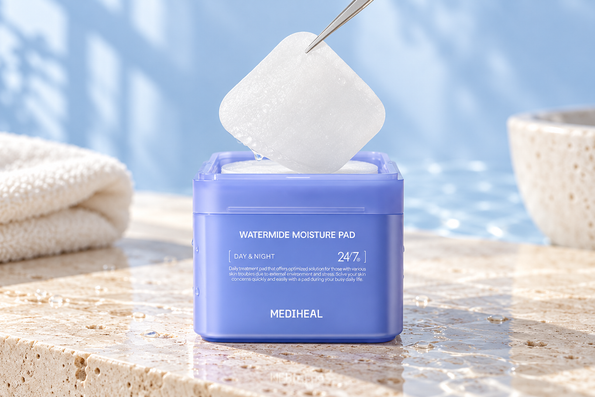
This format may appeal to you if you enjoy having the formula already supplied on a pad.
Before choosing it, consider whether you prefer contact with a pad or application with your hands. Also compare the ingredient list with products you already tolerate.
Use the instructions on your actual packaging, particularly for any leave-on timing.
Beauty of Joseon Glow Replenishing Rice Milk: A Liquid Option
Beauty of Joseon Glow Replenishing Rice Milk offers a bottled alternative.
The brand describes it as a hydrating and balancing toner. Its published ingredient list includes glycerin, panthenol, rice extract, and kaolin. Official Beauty of Joseon product information
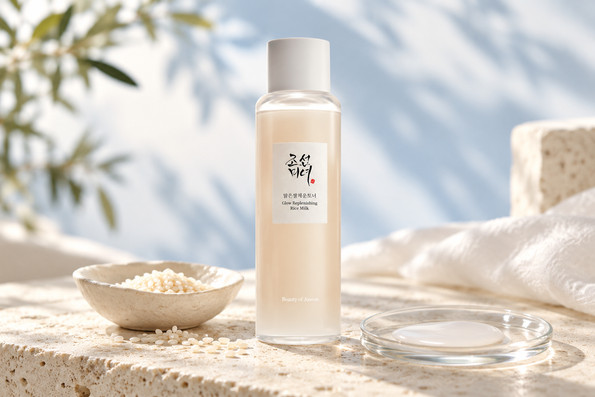
It provides an example of why liquid toners should not all be grouped together as simple watery formulas. Texture and formulation can vary considerably within the category.
Compare the current product instructions and ingredient list before adding it to your routine.
How to Use Toner Pads
The exact directions on your product take priority, but these steps provide a simple framework.
Step 1: Cleanse First
Use toner pads after your cleansing step unless the product specifically directs otherwise.
A toner pad should not be used as a shortcut for properly removing makeup or washing your face.
Step 2: Remove a Pad Hygienically
Use the supplied clean tweezers when provided. Avoid repeatedly touching the remaining pads inside the container.
Close the lid after taking out what you need.
Step 3: Follow the Intended Application
If the directions call for wiping, use a gentle motion rather than scrubbing repeatedly.
If the product allows targeted placement, follow the stated time. Do not assume that leaving it on longer will provide a better result.
Avoid the eye area or other areas excluded by the product directions.
Step 4: Continue Your Routine
Follow with your other suitable skincare steps and moisturizer.
In the morning, finish with sunscreen. A toner pad does not replace sunscreen or moisturizer.
How to Use Liquid Toner
Liquid toner can be straightforward to apply, especially when you keep the amount modest.
Step 1: Read the Bottle Instructions
Some formulas need preparation before dispensing, such as shaking when directed. Follow the instructions for your specific toner.
Step 2: Dispense a Small Amount
Use clean hands or a separate cotton pad if the directions allow either method.
Starting with a small amount makes it easier to judge the finish before adding more.
Step 3: Apply Gently
Spread or press the toner onto the intended areas without aggressive rubbing.
If you prefer a cotton pad, avoid repeatedly wiping over the same area just to create a stronger sensation.
Step 4: Follow With Moisturizer
Continue with suitable products in your routine.
You do not need several toner layers for the step to count. A simple application may be enough for your preferences.
Can You Use Toner Pads and Liquid Toner Together?
You can include both, but using both is optional.
Before layering, identify what each product contributes. If both provide a very similar hydration step, using one may be enough.
If both exfoliate, combining them may introduce unnecessary irritation. The American Academy of Dermatology advises considering products already in your routine when choosing how to exfoliate, including retinol and benzoyl peroxide products that can make skin more sensitive. Safe exfoliation guidance
For beginners, choosing one toner product makes it easier to observe how the skin responds.
You can always reassess later. There is no need to buy two formats simply because they appear together in a routine online.
Simple Routines With Toner Pads or Liquid Toner
A routine does not need to include every available skincare category.
The examples below show where a chosen toner step can fit. Keep any existing treatment instructions in mind.
A Simple Morning Routine
- Cleanse as appropriate for your routine.
- Apply your chosen toner or toner pad.
- Use a serum if you already have a suitable one.
- Apply moisturizer.
- Finish with sunscreen.
If you prefer fewer products, keep the toner step optional rather than treating it as a requirement.
A Simple Evening Routine
- Remove makeup and cleanse as needed.
- Apply your chosen toner product.
- Use any suitable treatment according to its instructions.
- Apply moisturizer.
The order of a specific treatment can vary, so follow its directions rather than forcing every product into a generic sequence.
When You Are Trying Something New
Keep the rest of your routine familiar while introducing the new toner.
Changing several products at the same time makes it harder to identify what helped or what caused discomfort.
Choosing a Toner for Your Routine in Canada
When comparing Korean toners in Canada, focus on how your skin currently feels and how you use your products.
You do not need a different toner simply because the season has changed. Instead, reassess whether your existing formula still feels comfortable.
If you find yourself applying more and more toner while your skin remains dry, consider whether your moisturizer or broader routine needs attention.
Shopping locally can also make it easier to compare sizes, Canadian-dollar prices, and product information. However, the most useful purchase is the one that suits your routine and gets used consistently.
Explore the Toners & Toner Pads collection at KoreanShop with a clear goal: hydration, a preferred application method, or a specific formula you have already researched.
Toner Pads vs. Toner: Which Offers Better Value?
The price on the container does not tell the whole story.
For pads, calculate:
Price per use = container price ÷ number of pads ÷ uses per pad
For normal single-use pads, use one application per pad in your calculation. If you use two pads each time, your cost per routine doubles.
For liquid toner, compare the bottle size with how much you typically use. The number of applications varies, so a larger bottle does not automatically mean better value.
Also consider whether you will finish the product within its indicated period after opening.
A cheaper product that you avoid using because you dislike the texture may offer less practical value than a comfortable product you regularly finish.
Common Toner Mistakes to Avoid
Assuming All Pads Exfoliate
Some pads focus mainly on hydration. Read the formula and instructions instead of judging by the format.
Assuming All Liquid Toners Are Gentle
A liquid toner can contain exfoliating ingredients or ingredients your skin does not tolerate.
Scrubbing With the Pad
More pressure does not make application more effective. Keep the motion gentle and stop if the product causes discomfort.
Leaving Every Pad on Like a Mask
Only use targeted placement when the manufacturer allows it. Follow the stated timing.
Adding Several Exfoliating Products at Once
Review your cleanser, toner, serum, and other treatments for overlapping exfoliating steps.
Skipping Moisturizer
A hydrating toner does not automatically provide everything you expect from a moisturizer.
Buying Based Only on a Highlighted Ingredient
Look at the complete formula, your previous experience, and the intended use.
Expecting Immediate Transformation
A comfortable routine should not depend on a dramatic sensation after each application. Judge whether the product fits your skin and routine over time.
How to Choose Before You Buy
Use this short checklist while comparing toner pads versus liquid toner:
- Purpose: Do you want hydration, exfoliation, or another clearly defined benefit?
- Formula: Have you reviewed the complete ingredient list?
- Application: Do you prefer hands, a separate cotton pad, or a pre-soaked pad?
- Tolerance: Does wiping tend to bother your skin?
- Overlap: Does the product duplicate an active step you already use?
- Value: Is the price reasonable for how often you will use it?
- Practicality: Will you enjoy using and storing the product?
If you cannot identify what the new product adds, you may not need to add it yet.
Frequently Asked Questions About Toner Pads vs. Toner
Are Toner Pads Better Than Liquid Toner?
Neither format is universally better. Toner pads provide a pre-soaked application, while liquid toner offers flexible dosing and application. Compare the actual formulas before choosing.
Can I Use Toner Pads Every Day?
That depends on the product instructions and your skin’s tolerance. Do not apply a daily-use assumption to every pad, particularly exfoliating formulas.
Are Toner Pads Suitable for Sensitive Skin?
Some people with sensitive skin may tolerate certain pads, while others find the formula or wiping uncomfortable. Consider both ingredients and friction, and test a new product before wider use.
Is Liquid Toner Better for Dry Skin?
It may be convenient if you prefer to apply a hydrating formula without wiping. However, the bottle format alone does not make it more moisturizing than every pad.
Can Oily Skin Use a Milky Toner?
A milky texture does not automatically rule a product out for oily skin. Compare the formula and how the finish feels on your own skin.
Do Toner Pads Replace Face Wash?
No. Use them after cleansing as directed. They should not replace proper makeup removal or your usual cleansing step.
Do Toner Pads Replace Serum?
Not automatically. A toner pad and a serum may have different formulas and intended purposes. Compare what each product contributes rather than swapping them based only on packaging.
Should I Rinse After Toner?
Follow the product directions. Many toner products are designed to remain on the skin, but the instructions for the exact formula should guide you.
Can I Reuse a Toner Pad?
Treat disposable toner pads as single-use products unless the manufacturer explicitly states otherwise. Do not return a used pad to the container.
Do I Need Toner in My Skincare Routine?
Toner is an optional step. It can be useful when you enjoy the formula and it serves a clear purpose, but you do not need to add one just to make your routine look complete.
Toner Pads vs. Toner: Make the Choice That Fits You
The toner pads vs toner decision comes down to the formula you want and the application you prefer.
Choose a pre-soaked pad if you enjoy that format and its directions fit your routine. Choose liquid toner if you want more control over the amount and the option to apply it with clean hands.