
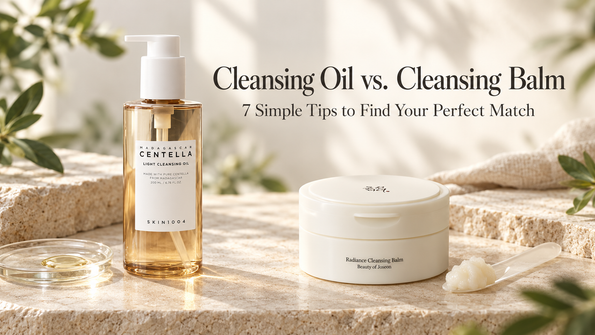
At the end of the day, your sunscreen will have company: foundation, concealer, a bit of sweat, and anything else that has accumulated on your face. You do not want to stand by the sink for a long time to get it off—or end up with skin that feels tight. The cleansing oil vs cleansing balm discussion usually begins there.
discussion usually begins there.
Both are rinse-off cleansers typically used as the first step of a double cleanse. The clear difference lies in their texture. Cleansing oil pours or pumps out as a liquid, while cleansing balm begins as a solid or semi-solid and melts as you massage it into your skin.
Once you give up the idea of finding a single best choice, the decision becomes simpler. Instead, consider the makeup and sunscreen you wear during the day, your preferred method of cleansing, and which formula your skin tolerates.
The following seven tips will help you make that decision.
Cleansing Oil vs. Cleansing Balm: A Quick Comparison
Before going into the details, here is what you are likely to notice at the sink.
| Feature | Cleansing oil | Cleansing balm |
|---|---|---|
| Starting texture | Liquid | Solid or semi-solid |
| Application | Usually dispensed into your hands | Usually scooped out or dispensed from a specialised container |
| Feel during use | Spreads as an oil immediately | Melts into an oily texture |
| Rinsing | An emulsifying formula mixes with water before rinsing | An emulsifying formula mixes with water before rinsing |
| Packaging | Often a pump bottle | Often a jar |
| Practical appeal | Quick dispensing | A less runny starting texture |
| What matters most | Complete formula, removal performance, and skin tolerance | Complete formula, removal performance, and skin tolerance |
A balm may have a rich texture yet still be easy to wash off. An oil can seem lightweight yet contain an ingredient your skin dislikes. Although the format provides a starting point, the specific product deserves a closer look.
1. Begin by Identifying What You Need to Remove
Imagine a normal evening rather than the most elaborate skincare routine you have seen online.
Do you wear sunscreen with a little concealer? A full face of long-wearing makeup? Waterproof mascara? Your answer will help you decide what your first cleanser needs to do.
Cleansing oils and balms can both be formulated to remove sunscreen and makeup. However, effectiveness differs from product to product. Refer to the manufacturer’s description to find out what kind of makeup the product is intended to remove.
Waterproof eye makeup deserves particular consideration. Follow the cleanser’s instructions around the eyes and use an appropriate eye-makeup remover if necessary. Repeated rubbing is not a good solution when a product is struggling.
There is no reason to choose the cleanser that sounds strongest. The aim is to remove the day’s products thoroughly and comfortably.
A useful question to ask before buying is:
“Will this remove what I actually wear?”
That tells you more than a general promise about “deep cleansing.”
2. Select a Texture You Will Enjoy Using
Texture can seem like a minor preference—until you are tired and ready for bed.
Cleansing oil is already liquid. You dispense it into your hands and apply it to your face according to the instructions. If you prefer pumping and applying, this approach may feel straightforward.
A balm requires a little more handling. You take some out of the container and let it soften as you massage. Some people enjoy the soft, cushiony starting texture. Others would rather avoid opening a jar and keeping track of a spatula.
There is no need for a scientific reason behind this preference. If a product feels convenient, it is easier to keep using it.
When a Cleansing Oil May Suit Your Routine
An oil may appeal to you if you:
- Prefer dispensing from a pump.
- Like a fluid texture from the beginning.
- Keep your cleanser beside the sink.
- Want to avoid scooping product from a jar.
The amount required depends on the formula and packaging instructions. Do not assume one pump is the correct amount for every bottle.
When a Cleansing Balm May Suit Your Routine
A balm may appeal to you if you:
- Prefer a product that is less runny before application.
- Enjoy a texture that melts during use.
- Do not mind using and cleaning a spatula.
- Prefer jar-style packaging.
When travelling, check the container’s closure and the relevant baggage rules. Solid-looking packaging does not mean the product is leakproof or exempt from liquid restrictions.
The better option is usually the one that simplifies your evening routine.
3. Consider the Ingredients Alongside Your Skin Type
“Oils are suitable for dry skin” and “balms are too heavy for oily skin” may be tempting shortcuts. They are, however, too general to guide every purchase.
The finished formula matters. That includes its cleansing ingredients, oils or emollients, fragrance components, and how it rinses.
Begin with what you already know about your skin. If a particular ingredient has caused problems before, look for it rather than relying on terms such as “gentle” or “Korean cleanser.”
Cleansing Oil or Balm for Oily Skin
Having oily skin does not, on its own, tell you which format will suit you best.
Consider the product as a whole and notice how your skin feels after rinsing. A cleanser does not need to leave a squeaky sensation to prove it has worked.
For acne-prone skin, neither format should be treated as an acne treatment. The American Academy of Dermatology recommends choosing products labelled “non-comedogenic” or “won’t clog pores” and using gentle cleansing methods. AAD advice on makeup and acne-prone skin
Even a suitable label cannot guarantee everyone will tolerate a product, so introduce it with care.
Cleansing Oil or Balm for Dry Skin
For dry skin, focus on the whole cleansing process.
Even if your first cleanser feels comfortable, a second cleanser may leave your skin feeling stripped. Hot water, repeated washing, and vigorous rubbing can also make the routine less comfortable.
Choose based on how your skin feels after rinsing rather than assuming a thick balm is more moisturising than every oil.
Cleansing Oil or Balm for Sensitive Skin
If your skin reacts easily, read the complete ingredient list.
“Fragrance-free” is not the same as “unscented.” If you know certain botanical ingredients or essential oils cause a reaction, keep those in mind while comparing products.
Test a new product before making it a permanent part of your routine. Follow suitable testing guidance along with the cleanser’s rinse-off instructions. AAD guidance on testing skincare products
4. Give Emulsifying and Rinsing Enough Attention
This step is easy to rush.
Cleansing oils and balms are often intended for dry skin first. Water is then added to help the formula form a milky emulsion before it is rinsed away.
Check your product’s instructions, since the recommended method may differ.
If you apply an oil-based cleanser and immediately rinse it off, you may miss part of the process the manufacturer intended. At the same time, there is no need to keep massaging indefinitely.
Try this sequence when it matches the label:
- Apply the recommended amount with clean, dry hands.
- Massage gently over dry skin.
- Add a little water and continue as directed.
- Rinse thoroughly with lukewarm water.
- Follow the instructions for any second cleanse.
Pay attention to the hairline, sides of the nose, and jaw, where product can be easy to overlook.
Then assess the result. Is there visible makeup remaining? Does your face feel comfortable? Is there an obvious residue even after thorough rinsing?
Those observations are more useful than deciding beforehand that all oils are greasy or all balms leave a film.
5. Make Sure It Fits Your Double-Cleansing Routine
Double cleansing usually involves an oil-based cleanser first, followed by a water-based cleanser.
It does not mean using two cleansing oils or combining an oil with a balm. They are generally alternatives for the first step.
The second cleanser should have a clear role. Choose a gentle one and follow its instructions rather than continuing to wash until your face feels unusually tight.
For example, Beauty of Joseon tells users to follow its Radiance Cleansing Balm with a water-based cleanser. That is guidance for that product, rather than evidence that everyone needs the same routine morning and night. Beauty of Joseon’s official directions
If your current cleanser removes what you wear and leaves your skin comfortable, another step may be unnecessary. If makeup remains after washing, a suitable first cleanser may be worth considering.
Keep the Rest of the Evening Simple
A practical evening routine could look like this:
- A first cleanser, when appropriate for what you need to remove.
- A gentle water-based cleanser, following the product directions.
- Any existing treatment, used according to its instructions.
- Moisturizer.
You can include a toner if you enjoy it, but there is no need to add several new products when changing your cleanser.
Making one change at a time makes it easier to see how your skin responds.
6. Focus on the Product, Not Just the Category
Choosing between actual products makes the decision more specific.
At KoreanShop, two options to consider are SKIN1004 Madagascar Centella Light Cleansing Oil and Beauty of Joseon Radiance Cleansing Balm. They show the difference between a liquid first cleanser and a melting balm.
The descriptions below are based on published product information, rather than personal testing.
SKIN1004 Madagascar Centella Light Cleansing Oil
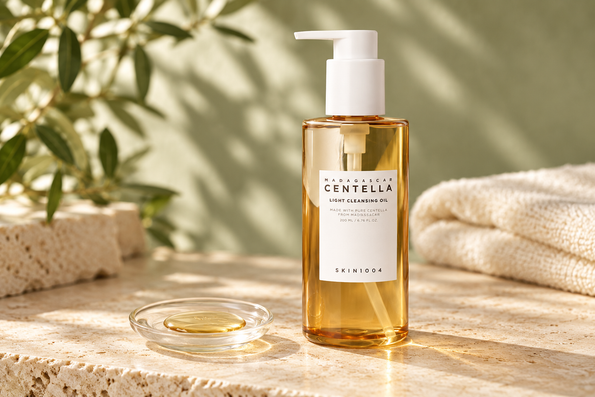
If you prefer a liquid cleanser, SKIN1004 Madagascar Centella Light Cleansing Oil is an option to explore.
SKIN1004 describes it as a light cleansing oil intended to dissolve makeup, sunscreen, and excess sebum. Its published key ingredients include Centella asiatica extract and several plant-derived oils.
For ingredient-conscious shoppers, one detail deserves attention: the brand lists bergamot, geranium, and rose oils. Do not assume the word “Centella” means the formula contains no aromatic plant oils. SKIN1004’s official product information
That detail does not decide whether the product will suit your skin. It gives you something specific to compare with your own ingredient preferences.
Consider this option if: you want a liquid first cleanser and are comfortable with the current formula.
Before use, read the instructions and ingredient list on the bottle you receive. Packaging and formulations may change.
Beauty of Joseon Radiance Cleansing Balm
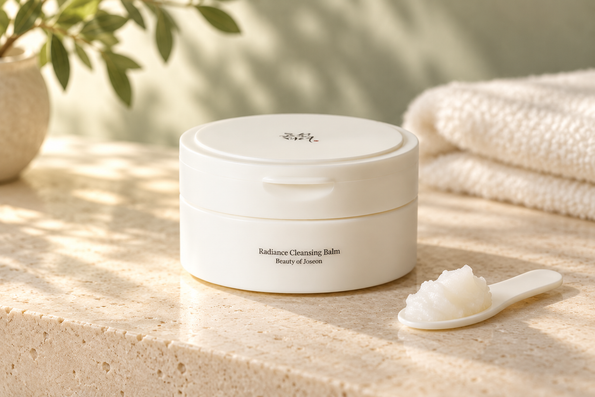
Beauty of Joseon Radiance Cleansing Balm offers a different starting texture.
Beauty of Joseon describes it as a buttery balm for removing makeup, sunscreen, and impurities. Its current official listing identifies it as fragrance-free. The directions call for application to dry skin, gentle massage, adding water to emulsify, and rinsing before a water-based cleanser. Beauty of Joseon’s official product information
If handling a runny product does not appeal to you, the balm format may be worth considering. You will still need to consider the complete formula and how it feels after rinsing.
Consider this option if: you prefer scooping out a balm and allowing it to melt during application.
Use clean hands and a clean spatula when provided. Close the container when you have finished.
Which of These Two Should You Choose?
Begin with your texture preference, then look at the ingredients.
If a pump dispenser and fluid texture appeal to you, take a closer look at the SKIN1004 option. If a melting balm sounds more comfortable, explore the Beauty of Joseon option.
You do not need both to establish a complete routine. One suitable first cleanser is enough for that role.
7. Assess the Results After Rinsing—and Check the Value
A cleanser has a purpose. Judge it according to that purpose.
After using it as directed, ask:
- Has it removed the products I wore?
- Did I need to rub repeatedly?
- Was rinsing straightforward?
- Did my skin feel comfortable afterwards?
- Is the packaging convenient for regular use?
You do not need an immediate glow, tingling, or a noticeable “pore-cleaning” effect to justify the purchase.
Give the cost some context, too. A 200 ml bottle of oil and a 100 ml jar of balm differ in size, but size alone does not tell you which will last longer. The amount used per application varies.
Compare the current Canadian-dollar price, recommended amount, and how often you expect to use it. Take the indicated period after opening into account as well.
A product you enjoy using and finish can be a wiser purchase than a discounted one that stays untouched.
When ordering online in Canada, check the final order total, delivery details, and returns policy before buying. Those practical details matter alongside the product itself.
How to Use Cleansing Oil Without Overcomplicating It
The directions on your bottle come first. For products intended for dry application and emulsification, keep the process simple.
Start with dry hands and a dry face. Dispense the recommended amount and spread it gently, rather than stretching a small amount so far that your fingers drag.
Work over areas where you have sunscreen or makeup, following the label’s instructions around the eyes. Add water as directed, then rinse thoroughly.
Follow with a water-based cleanser if the product instructions and your routine call for it.
You do not need a long massage for the process to count. If you keep working over the same area in the hope of removing every visible pore, pause and reconsider the goal. Cleansing should not turn into scrubbing.
How to Use Cleansing Balm
Take the amount recommended on the packaging using clean hands or a clean spatula, when provided.
For a balm intended for dry application, massage gently over dry skin and allow it to soften. Add water as directed to emulsify, then rinse.
Avoid dragging a firm piece of balm across your face. Let the texture soften as intended.
Keep water and used tools out of the container as much as possible, and close it after use. Do not return leftover product from your hands to the jar.
If makeup remains visible after correct use, check whether the cleanser is appropriate for that type of makeup before increasing pressure or washing again.
Cleansing Mistakes That Can Make Either Option Disappointing
Using Water at the Wrong Stage
Some first cleansers are intended for dry skin. Applying them to a wet face may change how they behave. Read the instructions before the first use.
Skipping the Emulsifying Step
If the formula calls for adding water before rinsing, give that step some attention. It is part of using the product as intended.
Rubbing Harder When Makeup Remains
Check whether you need a suitable makeup remover or a different cleansing formula. More force is not necessarily the missing step.
The American Academy of Dermatology recommends gentle cleansing with fingertips and advises against scrubbing. AAD face-washing guidance
Following Every Cleanse With a Harsh Second Wash
The first cleanser is only part of the experience. If your skin consistently feels uncomfortable afterwards, look at the second cleanser too.
Expecting a Cleanser to Treat Every Concern
Removing makeup and sunscreen is a useful job on its own. A cleansing oil or balm should not be expected to resolve acne, eliminate pores, or replace treatment chosen for a particular condition.
Frequently Asked Questions About Cleansing Oil vs. Cleansing Balm
Is Cleansing Oil Better Than Cleansing Balm?
Neither format suits everyone. Begin with the formula, what you need to remove, and your preferred application method. A liquid oil and a melting balm can serve the same role in a routine.
Can Someone With Oily Skin Use a Cleansing Balm?
The word “balm” alone is not enough to rule it out. Consider the finished formula, relevant label claims, and your own response. A thick starting texture does not automatically mean a heavy finish.
Should I Use Both a Cleansing Oil and a Cleansing Balm?
Usually, no. They are commonly alternatives for the first cleansing step. Using them one after the other generally adds overlap.
Do I Always Need a Second Cleanser?
Follow the product directions and consider what you are removing. Some manufacturers specifically recommend a second cleanser. Avoid treating one routine as compulsory for every person and situation.
Can I Use Cleansing Oil in the Morning?
You may not need the same makeup-removal step in the morning that you use at night. Choose a routine appropriate for your skin and circumstances rather than automatically repeating every evening step.
Will Cleansing Oil Remove Blackheads?
Do not buy cleansing oil expecting a guaranteed blackhead treatment. Removing surface products and excess oil is different from treating persistent clogged pores. Avoid prolonged rubbing in an attempt to force blackheads out.
Can I Use Kitchen Oil Instead?
A formulated cleansing oil is designed as a rinse-off skincare product. Do not assume cooking oil will emulsify, rinse, or perform in the same way.
What If My Skin Feels Tight After Double Cleansing?
Review the whole process: the first cleanser, second cleanser, water temperature, frequency, and amount of rubbing. Tightness is not the goal. Persistent discomfort or irritation needs attention rather than another cleansing step.
Which Is Easier for Beginners?
Choose the handling you prefer. A pump may feel simpler, while a balm may feel easier to control. Read the directions, start with one product, and keep the rest of your routine familiar.
Find a First Cleanser You Will Want to Use
The cleansing oil vs cleansing balm choice does not need to become a complicated skincare test.
Begin with what you wear during the day. Choose a texture that feels practical at your sink. Check the formula, follow the rinsing instructions, and notice how your skin feels afterwards.
By the end of the day, your sunscreen has company: foundation, concealer, a little sweat, and whatever else has settled on your face. You want to wash it off without standing at the sink for ages—or finishing with skin that feels tight.
That is usually where the cleansing oil vs cleansing balm question starts.
Both are rinse-off cleansers commonly used as the first step of a double cleanse. The obvious difference is texture. A cleansing oil pours or pumps out as a liquid. A cleansing balm starts as a solid or semi-solid and melts as you massage it over your skin.
Choosing between them gets easier once you stop looking for a universal winner. Think instead about what you wear during the day, how you like to cleanse, and which formula your skin tolerates.
These seven tips will help you make that choice.
Cleansing Oil vs. Cleansing Balm: A Quick Comparison
Before we get into the details, here is what you are likely to notice at the sink.
| Feature | Cleansing oil | Cleansing balm |
|---|---|---|
| Starting texture | Liquid | Solid or semi-solid |
| Application | Usually dispensed into your hands | Usually scooped out or dispensed from a specialised container |
| Feel during use | Spreads as an oil immediately | Melts into an oily texture |
| Rinsing | An emulsifying formula mixes with water before rinsing | An emulsifying formula mixes with water before rinsing |
| Packaging | Often a pump bottle | Often a jar |
| Practical appeal | Quick dispensing | A less runny starting texture |
| What matters most | Complete formula, removal performance, and skin tolerance | Complete formula, removal performance, and skin tolerance |
A balm can feel rich and still rinse away comfortably. An oil can feel light and still contain an ingredient your skin dislikes. The format gives you a starting point, but the individual product deserves a closer look.
1. Start With What You Need to Remove
Think about an ordinary evening rather than the most elaborate skincare routine you have seen online.
Do you wear sunscreen and a little concealer? A full face of long-wearing makeup? Waterproof mascara? The answer helps you judge what you need from your first cleanser.
Both cleansing oils and balms can be formulated to remove sunscreen and makeup. However, performance varies from product to product. Check the manufacturer’s description for the types of makeup it is intended to remove.
Waterproof eye makeup deserves particular attention. Follow the cleanser’s directions around the eyes, and use a suitable eye-makeup remover if needed. Repeated rubbing is not a good workaround for a product that is struggling.
There is also no reason to assume you need the strongest-sounding cleanser available. Your goal is to remove the day’s products comfortably and thoroughly.
A useful buying question: “Will this remove what I actually wear?”
That tells you more than a broad promise about “deep cleansing.”
2. Choose a Texture You Will Enjoy Using
Texture sounds like a small preference until you are tired and ready for bed.
A cleansing oil is already fluid. You dispense it into your hands and spread it across your face according to the instructions. If you like a quick pump-and-apply step, this may feel straightforward.
A balm takes a little more handling. You remove a portion from the container and let it soften as you massage. Some people enjoy that cushiony starting texture. Others would rather avoid opening a jar and keeping track of a spatula.
Neither preference needs a scientific justification. A product that feels convenient to you is easier to keep using.
When a Cleansing Oil May Suit Your Routine
An oil may appeal to you if you:
- Prefer dispensing from a pump.
- Like a fluid texture from the start.
- Keep your cleanser in one place beside the sink.
- Want to avoid scooping product from a jar.
The amount you need depends on the formula and packaging directions. Do not assume one pump is the correct dose for every bottle.
When a Cleansing Balm May Suit Your Routine
A balm may appeal to you if you:
- Prefer a product that is less runny before application.
- Enjoy a texture that melts during use.
- Do not mind using and cleaning a spatula.
- Prefer jar-style packaging.
For travel, check the container’s closure and the relevant baggage rules. Solid-looking packaging alone does not guarantee that a product is leakproof or exempt from liquid restrictions.
The better choice is often the one that makes your evening routine easier.
3. Compare Ingredients Before Choosing by Skin Type
“Oils are for dry skin” and “balms are too heavy for oily skin” are tempting shortcuts. They are also too broad to guide every purchase.
The finished formula matters. That includes the cleansing ingredients, oils or emollients, fragrance components, and how the product rinses.
Start with what you already know about your skin. If a particular ingredient has caused problems before, check for it rather than relying on the words “gentle” or “Korean cleanser.”
Cleansing Oil or Balm for Oily Skin
Having oily skin does not, by itself, tell you which format will work best.
Look at the whole product and how your skin responds after rinsing. You do not need a squeaky feeling to prove that the cleanser has worked.
If you are acne-prone, neither format should be treated as an acne treatment. The American Academy of Dermatology recommends choosing products labelled non-comedogenic or “won’t clog pores” and using gentle cleansing methods. AAD advice on makeup and acne-prone skin
Even a suitable label cannot promise that every person will tolerate a product, so introduce it thoughtfully.
Cleansing Oil or Balm for Dry Skin
For dry skin, pay attention to the entire cleansing process.
A comfortable first cleanser can still be followed by a second cleanser that leaves your skin feeling stripped. Hot water, repeated washing, and vigorous rubbing can also make the routine less comfortable.
Choose for the finish you experience after rinsing, rather than assuming a thick balm must be more moisturising than every oil.
Cleansing Oil or Balm for Sensitive Skin
If your skin reacts easily, read the complete ingredient list.
Fragrance-free and unscented are not interchangeable descriptions. Botanical ingredients and essential oils also deserve a look if you know they bother your skin.
Try a new product before making it a permanent part of your routine. Follow appropriate product-testing guidance and the cleanser’s rinse-off instructions. AAD guidance on testing skincare products
4. Pay Attention to Emulsifying and Rinsing
This is an easy step to rush.
Many cleansing oils and balms are designed to be massaged onto dry skin first. Water is added afterwards, helping the formula mix into a milky-looking emulsion before it is rinsed away.
Always check your own product’s instructions, because the recommended method can differ.
If you apply an oil-based cleanser and immediately splash it off, you may miss part of the process the manufacturer intended. On the other hand, there is no need to keep massaging indefinitely.
Try this practical sequence when it matches the label:
- Apply the recommended amount with clean, dry hands.
- Massage gently over dry skin.
- Add a little water and continue as directed.
- Rinse thoroughly with lukewarm water.
- Follow the product’s instructions for any second cleanse.
Give a little attention to the hairline, sides of the nose, and jaw, where product can be easy to miss.
Afterwards, assess the result. Is there visible makeup left? Does your face feel comfortable? Is there an obvious residue that persists after proper rinsing?
Those observations are more useful than deciding in advance that every oil is greasy or every balm leaves a film.
5. Make Sure It Fits Your Double-Cleansing Routine
Double cleansing generally means using an oil-based cleanser first, followed by a water-based cleanser.
That does not mean using two cleansing oils—or an oil and a balm together. These are usually alternatives for the same first step.
The second cleanser should have a clear role in the routine. Choose a gentle formula and follow the directions, rather than repeating the wash until your face feels unusually tight.
Beauty of Joseon, for example, instructs users to follow its Radiance Cleansing Balm with a water-based cleanser. That is a direction for that product, rather than proof that every person needs the same routine morning and night. Beauty of Joseon’s official directions
If your existing cleanser removes what you wear and leaves your skin comfortable, adding another step may not be necessary. If makeup remains after washing, a suitable first cleanser may be worth considering.
Keep the Rest of the Evening Simple
A practical evening routine could look like this:
- First cleanser, when appropriate for what you need to remove.
- Gentle water-based cleanser, following the product directions.
- Any treatment you already use, according to its instructions.
- Moisturizer.
You can include a toner if you enjoy it, but you do not need to add several new products when changing your cleanser.
Introducing one change at a time makes it easier to understand how your skin responds.
6. Look Closely at the Product, Not Just the Category
Comparing real products makes the choice more concrete.
At KoreanShop, two options to consider are SKIN1004 Madagascar Centella Light Cleansing Oil and Beauty of Joseon Radiance Cleansing Balm. They illustrate the difference between a liquid first cleanser and a melting balm.
The following descriptions are based on published product information, rather than personal wear testing.
SKIN1004 Madagascar Centella Light Cleansing Oil
[Image 2 here: The actual SKIN1004 cleansing-oil bottle on a clean background.]
SKIN1004 Madagascar Centella Light Cleansing Oil is an option to compare if you prefer a liquid cleanser.
SKIN1004 describes it as a light cleansing oil intended to dissolve makeup, sunscreen, and excess sebum. Its published key ingredients include Centella asiatica extract and several plant-derived oils.
An important detail for ingredient-conscious shoppers: the brand lists bergamot, geranium, and rose oils among those ingredients. Do not assume the word “Centella” means the formula contains no aromatic plant oils. SKIN1004’s official product information
That does not tell you the product will or will not suit your skin. It gives you something specific to compare with your own ingredient preferences.
Consider this option if: you want to explore a liquid first cleanser and are comfortable with the current formula.
Before use, read the directions and ingredient list on the bottle you receive. Packaging and formulations can change.
Beauty of Joseon Radiance Cleansing Balm
[Image 3 here: The actual Beauty of Joseon balm jar, with a small amount of balm on a spatula.]
Beauty of Joseon Radiance Cleansing Balm offers a different starting texture.
The brand describes a buttery balm for removing makeup, sunscreen, and impurities, and labels the current product fragrance-free. Its directions call for application to dry skin, gentle massage, the addition of water to emulsify, and rinsing before a water-based cleanser. Beauty of Joseon’s official product information
If you dislike handling a runny product, the balm format may be appealing. You will still need to consider the complete formula and how it feels after rinsing.
Consider this option if: you prefer scooping a balm and letting it melt during application.
Use clean hands and a clean spatula when provided. Keep the container closed between uses.
Which of These Two Should You Pick?
Start with your texture preference, then compare ingredients.
If pump dispensing and a fluid texture appeal to you, look more closely at the SKIN1004 option. If a melting balm sounds more comfortable, explore the Beauty of Joseon option.
There is no need to buy both just to build a complete routine. One suitable first cleanser is enough for that role.
7. Judge the Results After Rinsing—and Check the Value
A cleanser has a job to do. Evaluate it on that job.
After using it according to the instructions, ask:
- Has it removed the products I wore?
- Did I need to rub repeatedly?
- Was it easy to rinse?
- Did my skin feel comfortable afterwards?
- Is the packaging convenient enough to use regularly?
You do not need an immediate glow, a tingling sensation, or a dramatic “pore-cleaning” result to justify the purchase.
Also give the cost some context. A 200 ml oil and a 100 ml balm are different sizes, but size alone cannot tell you which will last longer. The amount used per application varies.
Compare the current Canadian-dollar price, the recommended amount, and how frequently you expect to use it. Consider the indicated period after opening as well.
A product you enjoy using and finish can be a more sensible purchase than a discounted jar that stays untouched.
For Canadian online orders, check the final order total, delivery details, and returns policy before purchasing. Those practical details matter just as much as an attractive product photo.
How to Use Cleansing Oil Without Overcomplicating It
The exact directions on your bottle come first. For products intended for dry application and emulsification, keep the process straightforward.
Begin with dry hands and a dry face. Dispense the recommended amount and spread it gently, rather than stretching a tiny amount so far that you end up rubbing.
Work over the areas where you have sunscreen or makeup, taking care around the eyes according to the label. Add water as directed, then rinse thoroughly.
Follow with your water-based cleanser if the product instructions and your routine call for it.
Long massages are not required to make the process legitimate. If you are repeatedly working over the same patch in the hope of removing every visible pore, pause and reassess the goal. Cleansing should not become a scrubbing session.
How to Use Cleansing Balm
With clean hands, remove the amount recommended on the packaging. Use a clean spatula if one is supplied.
For a balm intended for dry application, massage it gently over dry skin and allow it to soften. Add water to emulsify as directed, then rinse.
Avoid dragging a firm piece of balm across your face. Let the texture soften as intended.
Keep water and used tools out of the container as much as possible, and close it after use. Do not return leftover product from your hands to the jar.
If makeup is still visible after proper use, check whether the product is suitable for that type of makeup before increasing the pressure or washing repeatedly.
Cleansing Mistakes That Can Make Either Option Disappointing
Using Water at the Wrong Stage
Some first cleansers are designed to go onto dry skin. Starting with a wet face may change how they behave. Read the application directions before your first use.
Skipping the Emulsifying Step
When a formula calls for adding water before rinsing, give that step a little attention. It is part of using the product as intended.
Rubbing Harder When Makeup Remains
Check whether you need a suitable makeup remover or a different cleansing formula. Force is not the missing skincare ingredient.
The American Academy of Dermatology recommends gentle cleansing with fingertips and advises against scrubbing. AAD’s face-washing guidance
Following Every Cleanse With a Harsh Second Wash
The first cleanser is only part of the experience. Review the second cleanser too if your skin consistently feels uncomfortable after the routine.
Expecting a Cleanser to Treat Every Concern
Removing makeup and sunscreen is a useful job on its own. A cleansing oil or balm should not be expected to resolve acne, erase pores, or replace a treatment chosen for a specific condition.
Frequently Asked Questions About Cleansing Oil vs. Cleansing Balm
Is Cleansing Oil Better Than Cleansing Balm?
Neither format is better for everyone. Start with the formula, what you need to remove, and your preferred application method. A liquid oil and a melting balm can serve the same role in a routine.
Can I Use a Cleansing Balm if I Have Oily Skin?
The word “balm” alone does not rule a product out. Look at the finished formula, relevant label claims, and your own response. Do not assume a thick starting texture means it will leave a heavy finish.
Do I Need Cleansing Oil and Cleansing Balm Together?
Usually, no. They are commonly alternatives for the first cleansing step. Using both one after the other adds overlap without an obvious purpose.
Do I Always Need a Second Cleanser?
Follow the product’s directions and consider what you are removing. Some brands explicitly recommend a second cleanser. Avoid treating one routine as compulsory for every person and every situation.
Can I Use a Cleansing Oil in the Morning?
You may not need the same makeup-removal step in the morning that you use at night. Choose a cleansing routine that suits your skin and circumstances rather than automatically repeating every evening step.
Will Cleansing Oil Remove Blackheads?
Do not buy a cleansing oil expecting it to be a guaranteed blackhead treatment. Removing surface products and excess oil is different from treating persistent clogged pores. Avoid prolonged rubbing in an attempt to force them out.
Can I Use Kitchen Oil Instead?
Cleansing Oil vs. Cleansing Balm: 7 Simple Tips to Find Your Perfect Match
[Image 1: Main comparison image here]
At the end of the day, your sunscreen will have company: foundation, concealer, a bit of sweat, and anything else that has accumulated on your face. You do not want to stand by the sink for a long time to get it off—or end up with skin that feels tight.
The cleansing oil vs cleansing balm discussion usually begins there.
Both are rinse-off cleansers typically used as the first step of a double cleanse. The clear difference lies in their texture. Cleansing oil pours or pumps out as a liquid, while cleansing balm begins as a solid or semi-solid and melts as you massage it into your skin.
Once you give up the idea of finding a single best choice, the decision becomes simpler. Instead, consider the makeup and sunscreen you wear during the day, your preferred method of cleansing, and which formula your skin tolerates.
The following seven tips will help you make that decision.
Cleansing Oil vs. Cleansing Balm: A Quick Comparison
Before going into the details, here is what you are likely to notice at the sink.
| Feature | Cleansing oil | Cleansing balm |
|---|---|---|
| Starting texture | Liquid | Solid or semi-solid |
| Application | Usually dispensed into your hands | Usually scooped out or dispensed from a specialised container |
| Feel during use | Spreads as an oil immediately | Melts into an oily texture |
| Rinsing | An emulsifying formula mixes with water before rinsing | An emulsifying formula mixes with water before rinsing |
| Packaging | Often a pump bottle | Often a jar |
| Practical appeal | Quick dispensing | A less runny starting texture |
| What matters most | Complete formula, removal performance, and skin tolerance | Complete formula, removal performance, and skin tolerance |
A balm may have a rich texture yet still be easy to wash off. An oil can seem lightweight yet contain an ingredient your skin dislikes. Although the format provides a starting point, the specific product deserves a closer look.
1. Begin by Identifying What You Need to Remove
Imagine a normal evening rather than the most elaborate skincare routine you have seen online.
Do you wear sunscreen with a little concealer? A full face of long-wearing makeup? Waterproof mascara? Your answer will help you decide what your first cleanser needs to do.
Cleansing oils and balms can both be formulated to remove sunscreen and makeup. However, effectiveness differs from product to product. Refer to the manufacturer’s description to find out what kind of makeup the product is intended to remove.
Waterproof eye makeup deserves particular consideration. Follow the cleanser’s instructions around the eyes and use an appropriate eye-makeup remover if necessary. Repeated rubbing is not a good solution when a product is struggling.
There is no reason to choose the cleanser that sounds strongest. The aim is to remove the day’s products thoroughly and comfortably.
A useful question to ask before buying is:
“Will this remove what I actually wear?”
That tells you more than a general promise about “deep cleansing.”
2. Select a Texture You Will Enjoy Using
Texture can seem like a minor preference—until you are tired and ready for bed.
Cleansing oil is already liquid. You dispense it into your hands and apply it to your face according to the instructions. If you prefer pumping and applying, this approach may feel straightforward.
A balm requires a little more handling. You take some out of the container and let it soften as you massage. Some people enjoy the soft, cushiony starting texture. Others would rather avoid opening a jar and keeping track of a spatula.
There is no need for a scientific reason behind this preference. If a product feels convenient, it is easier to keep using it.
When a Cleansing Oil May Suit Your Routine
An oil may appeal to you if you:
- Prefer dispensing from a pump.
- Like a fluid texture from the beginning.
- Keep your cleanser beside the sink.
- Want to avoid scooping product from a jar.
The amount required depends on the formula and packaging instructions. Do not assume one pump is the correct amount for every bottle.
When a Cleansing Balm May Suit Your Routine
A balm may appeal to you if you:
- Prefer a product that is less runny before application.
- Enjoy a texture that melts during use.
- Do not mind using and cleaning a spatula.
- Prefer jar-style packaging.
When travelling, check the container’s closure and the relevant baggage rules. Solid-looking packaging does not mean the product is leakproof or exempt from liquid restrictions.
The better option is usually the one that simplifies your evening routine.
3. Consider the Ingredients Alongside Your Skin Type
“Oils are suitable for dry skin” and “balms are too heavy for oily skin” may be tempting shortcuts. They are, however, too general to guide every purchase.
The finished formula matters. That includes its cleansing ingredients, oils or emollients, fragrance components, and how it rinses.
Begin with what you already know about your skin. If a particular ingredient has caused problems before, look for it rather than relying on terms such as “gentle” or “Korean cleanser.”
Cleansing Oil or Balm for Oily Skin
Having oily skin does not, on its own, tell you which format will suit you best.
Consider the product as a whole and notice how your skin feels after rinsing. A cleanser does not need to leave a squeaky sensation to prove it has worked.
For acne-prone skin, neither format should be treated as an acne treatment. The American Academy of Dermatology recommends choosing products labelled “non-comedogenic” or “won’t clog pores” and using gentle cleansing methods. AAD advice on makeup and acne-prone skin
Even a suitable label cannot guarantee everyone will tolerate a product, so introduce it with care.
Cleansing Oil or Balm for Dry Skin
For dry skin, focus on the whole cleansing process.
Even if your first cleanser feels comfortable, a second cleanser may leave your skin feeling stripped. Hot water, repeated washing, and vigorous rubbing can also make the routine less comfortable.
Choose based on how your skin feels after rinsing rather than assuming a thick balm is more moisturising than every oil.
Cleansing Oil or Balm for Sensitive Skin
If your skin reacts easily, read the complete ingredient list.
“Fragrance-free” is not the same as “unscented.” If you know certain botanical ingredients or essential oils cause a reaction, keep those in mind while comparing products.
Test a new product before making it a permanent part of your routine. Follow suitable testing guidance along with the cleanser’s rinse-off instructions. AAD guidance on testing skincare products
4. Give Emulsifying and Rinsing Enough Attention
This step is easy to rush.
Cleansing oils and balms are often intended for dry skin first. Water is then added to help the formula form a milky emulsion before it is rinsed away.
Check your product’s instructions, since the recommended method may differ.
If you apply an oil-based cleanser and immediately rinse it off, you may miss part of the process the manufacturer intended. At the same time, there is no need to keep massaging indefinitely.
Try this sequence when it matches the label:
- Apply the recommended amount with clean, dry hands.
- Massage gently over dry skin.
- Add a little water and continue as directed.
- Rinse thoroughly with lukewarm water.
- Follow the instructions for any second cleanse.
Pay attention to the hairline, sides of the nose, and jaw, where product can be easy to overlook.
Then assess the result. Is there visible makeup remaining? Does your face feel comfortable? Is there an obvious residue even after thorough rinsing?
Those observations are more useful than deciding beforehand that all oils are greasy or all balms leave a film.
5. Make Sure It Fits Your Double-Cleansing Routine
Double cleansing usually involves an oil-based cleanser first, followed by a water-based cleanser.
It does not mean using two cleansing oils or combining an oil with a balm. They are generally alternatives for the first step.
The second cleanser should have a clear role. Choose a gentle one and follow its instructions rather than continuing to wash until your face feels unusually tight.
For example, Beauty of Joseon tells users to follow its Radiance Cleansing Balm with a water-based cleanser. That is guidance for that product, rather than evidence that everyone needs the same routine morning and night. Beauty of Joseon’s official directions
If your current cleanser removes what you wear and leaves your skin comfortable, another step may be unnecessary. If makeup remains after washing, a suitable first cleanser may be worth considering.
Keep the Rest of the Evening Simple
A practical evening routine could look like this:
- A first cleanser, when appropriate for what you need to remove.
- A gentle water-based cleanser, following the product directions.
- Any existing treatment, used according to its instructions.
- Moisturizer.
You can include a toner if you enjoy it, but there is no need to add several new products when changing your cleanser.
Making one change at a time makes it easier to see how your skin responds.
6. Focus on the Product, Not Just the Category
Choosing between actual products makes the decision more specific.
At KoreanShop, two options to consider are SKIN1004 Madagascar Centella Light Cleansing Oil and Beauty of Joseon Radiance Cleansing Balm. They show the difference between a liquid first cleanser and a melting balm.
The descriptions below are based on published product information, rather than personal testing.
SKIN1004 Madagascar Centella Light Cleansing Oil
[Image 2: SKIN1004 cleansing-oil bottle here]
If you prefer a liquid cleanser, SKIN1004 Madagascar Centella Light Cleansing Oil is an option to explore.
SKIN1004 describes it as a light cleansing oil intended to dissolve makeup, sunscreen, and excess sebum. Its published key ingredients include Centella asiatica extract and several plant-derived oils.
For ingredient-conscious shoppers, one detail deserves attention: the brand lists bergamot, geranium, and rose oils. Do not assume the word “Centella” means the formula contains no aromatic plant oils. SKIN1004’s official product information
That detail does not decide whether the product will suit your skin. It gives you something specific to compare with your own ingredient preferences.
Consider this option if: you want a liquid first cleanser and are comfortable with the current formula.
Before use, read the instructions and ingredient list on the bottle you receive. Packaging and formulations may change.
Beauty of Joseon Radiance Cleansing Balm
[Image 3: Beauty of Joseon balm jar with a small amount of balm on a spatula here]
Beauty of Joseon Radiance Cleansing Balm offers a different starting texture.
Beauty of Joseon describes it as a buttery balm for removing makeup, sunscreen, and impurities. Its current official listing identifies it as fragrance-free. The directions call for application to dry skin, gentle massage, adding water to emulsify, and rinsing before a water-based cleanser. Beauty of Joseon’s official product information
If handling a runny product does not appeal to you, the balm format may be worth considering. You will still need to consider the complete formula and how it feels after rinsing.
Consider this option if: you prefer scooping out a balm and allowing it to melt during application.
Use clean hands and a clean spatula when provided. Close the container when you have finished.
Which of These Two Should You Choose?
Begin with your texture preference, then look at the ingredients.
If a pump dispenser and fluid texture appeal to you, take a closer look at the SKIN1004 option. If a melting balm sounds more comfortable, explore the Beauty of Joseon option.
You do not need both to establish a complete routine. One suitable first cleanser is enough for that role.
7. Assess the Results After Rinsing—and Check the Value
A cleanser has a purpose. Judge it according to that purpose.
After using it as directed, ask:
- Has it removed the products I wore?
- Did I need to rub repeatedly?
- Was rinsing straightforward?
- Did my skin feel comfortable afterwards?
- Is the packaging convenient for regular use?
You do not need an immediate glow, tingling, or a noticeable “pore-cleaning” effect to justify the purchase.
Give the cost some context, too. A 200 ml bottle of oil and a 100 ml jar of balm differ in size, but size alone does not tell you which will last longer. The amount used per application varies.
Compare the current Canadian-dollar price, recommended amount, and how often you expect to use it. Take the indicated period after opening into account as well.
A product you enjoy using and finish can be a wiser purchase than a discounted one that stays untouched.
When ordering online in Canada, check the final order total, delivery details, and returns policy before buying. Those practical details matter alongside the product itself.
How to Use Cleansing Oil Without Overcomplicating It
The directions on your bottle come first. For products intended for dry application and emulsification, keep the process simple.
Start with dry hands and a dry face. Dispense the recommended amount and spread it gently, rather than stretching a small amount so far that your fingers drag.
Work over areas where you have sunscreen or makeup, following the label’s instructions around the eyes. Add water as directed, then rinse thoroughly.
Follow with a water-based cleanser if the product instructions and your routine call for it.
You do not need a long massage for the process to count. If you keep working over the same area in the hope of removing every visible pore, pause and reconsider the goal. Cleansing should not turn into scrubbing.
How to Use Cleansing Balm
Take the amount recommended on the packaging using clean hands or a clean spatula, when provided.
For a balm intended for dry application, massage gently over dry skin and allow it to soften. Add water as directed to emulsify, then rinse.
Avoid dragging a firm piece of balm across your face. Let the texture soften as intended.
Keep water and used tools out of the container as much as possible, and close it after use. Do not return leftover product from your hands to the jar.
If makeup remains visible after correct use, check whether the cleanser is appropriate for that type of makeup before increasing pressure or washing again.
Cleansing Mistakes That Can Make Either Option Disappointing
Using Water at the Wrong Stage
Some first cleansers are intended for dry skin. Applying them to a wet face may change how they behave. Read the instructions before the first use.
Skipping the Emulsifying Step
If the formula calls for adding water before rinsing, give that step some attention. It is part of using the product as intended.
Rubbing Harder When Makeup Remains
Check whether you need a suitable makeup remover or a different cleansing formula. More force is not necessarily the missing step.
The American Academy of Dermatology recommends gentle cleansing with fingertips and advises against scrubbing. AAD face-washing guidance
Following Every Cleanse With a Harsh Second Wash
The first cleanser is only part of the experience. If your skin consistently feels uncomfortable afterwards, look at the second cleanser too.
Expecting a Cleanser to Treat Every Concern
Removing makeup and sunscreen is a useful job on its own. A cleansing oil or balm should not be expected to resolve acne, eliminate pores, or replace treatment chosen for a particular condition.
Frequently Asked Questions About Cleansing Oil vs. Cleansing Balm
Is Cleansing Oil Better Than Cleansing Balm?
Neither format suits everyone. Begin with the formula, what you need to remove, and your preferred application method. A liquid oil and a melting balm can serve the same role in a routine.
Can Someone With Oily Skin Use a Cleansing Balm?
The word “balm” alone is not enough to rule it out. Consider the finished formula, relevant label claims, and your own response. A thick starting texture does not automatically mean a heavy finish.
Should I Use Both a Cleansing Oil and a Cleansing Balm?
Usually, no. They are commonly alternatives for the first cleansing step. Using them one after the other generally adds overlap.
Do I Always Need a Second Cleanser?
Follow the product directions and consider what you are removing. Some manufacturers specifically recommend a second cleanser. Avoid treating one routine as compulsory for every person and situation.
Can I Use Cleansing Oil in the Morning?
You may not need the same makeup-removal step in the morning that you use at night. Choose a routine appropriate for your skin and circumstances rather than automatically repeating every evening step.
Will Cleansing Oil Remove Blackheads?
Do not buy cleansing oil expecting a guaranteed blackhead treatment. Removing surface products and excess oil is different from treating persistent clogged pores. Avoid prolonged rubbing in an attempt to force blackheads out.
Can I Use Kitchen Oil Instead?
A formulated cleansing oil is designed as a rinse-off skincare product. Do not assume cooking oil will emulsify, rinse, or perform in the same way.
What If My Skin Feels Tight After Double Cleansing?
Review the whole process: the first cleanser, second cleanser, water temperature, frequency, and amount of rubbing. Tightness is not the goal. Persistent discomfort or irritation needs attention rather than another cleansing step.
Which Is Easier for Beginners?
Choose the handling you prefer. A pump may feel simpler, while a balm may feel easier to control. Read the directions, start with one product, and keep the rest of your routine familiar.
Find a First Cleanser You Will Want to Use
The cleansing oil vs cleansing balm choice does not need to become a complicated skincare test.
Begin with what you wear during the day. Choose a texture that feels practical at your sink. Check the formula, follow the rinsing instructions, and notice how your skin feels afterwards.
What if My Skin Feels Tight After Double Cleansing?
Review the whole process: the first cleanser, second cleanser, water temperature, frequency, and how much you rub. Tightness is not a target result. Persistent discomfort or irritation deserves attention rather than another cleansing step.
Which Is Easier for Beginners?
Choose the handling you prefer. A pump may feel simpler; a balm may feel easier to control. Read the directions, start with one product, and keep the rest of your routine familiar.
Find a First Cleanser You Will Want to Use
The cleansing oil vs cleansing balm decision does not need to become a complicated skincare test.
Start with what you wear during the day. Choose a texture that makes sense at your sink. Check the formula, follow the rinsing instructions, and pay attention to how your skin feels afterwards.