

Dry skin in winter can feel tight, rough, or flaky, especially when you move between cold outdoor air and heated indoor spaces. A practical winter skincare routine for dry skin starts with a gentle cleanser, moisturizer after washing, and sunscreen during the day. You can then adjust the product textures to suit your skin instead of adding a long list of new steps.
The Canadian Dermatology Association notes that cold weather, low outdoor humidity, and indoor heating can contribute to dry skin. (Canadian Dermatology Association: Dry Skin) If your face feels uncomfortable this winter, these five K-Beauty tips can help you simplify your routine and choose products more thoughtfully.
Quick answer: What should you do about dry skin in winter?
Use lukewarm water, cleanse gently, apply moisturizer while your skin is slightly damp, and use sunscreen on exposed skin during the day. If a product seems to sting or worsen irritation, simplify your routine and review the product label. Add any new product one at a time so you can see how your skin responds.
You do not need a ten-step routine to care for dry skin in winter. Start with the basics, then decide whether your skin needs an additional hydrating layer or a richer moisturizer.
Why does dry skin get worse during a Canadian winter?
Canadian weather can change how your skin feels from one day to the next. Cold outdoor air and wind may leave exposed areas feeling uncomfortable. Indoor heating can also make the air feel dry. Frequent hot showers, harsh cleansing, and products that irritate your skin may add to that discomfort.
Your routine may need a seasonal adjustment, but that doesn’t mean every product has to change. Think about when the dryness begins. Does your face feel tight after washing? Does it become flaky after spending time outdoors? Does a certain product cause stinging? Those clues can help you decide what to change first.
Dry skin and dehydrated skin: what’s the difference?
“Dry skin” often refers to a skin type that produces less oil. “Dehydrated skin” describes skin that lacks water. The words are sometimes used interchangeably, and both can be associated with a tight or rough feeling. You don’t need to identify the exact cause on your own to begin making your routine gentler.
Pay attention to how your skin responds to products. If dryness is persistent, painful, or accompanied by a rash, it may need more than a cosmetic routine. Consider getting advice from a healthcare professional.
1. Use a gentle cleanser and lukewarm water
A winter cleanser should leave your face feeling clean and comfortable. If your skin feels tight or squeaky after washing, the cleanser or your cleansing routine may not suit you.
Try these simple adjustments:
- Wash with lukewarm water instead of hot water.
- Use your fingertips rather than a rough cloth or scrub.
- Keep cleansing brief and rinse thoroughly.
- Pat your face dry instead of rubbing.
- If your skin feels tight after washing, consider cleansing only in the evening and rinsing with water in the morning.
Your routine may differ if you wear makeup or sunscreen, or if a healthcare professional has recommended a particular cleanser. Check each product’s label and directions.
You can browse facial cleansers at KoreanShop and compare the product details. If you have sensitive skin, read the full ingredient list and introduce a new cleanser gradually.
2. Apply moisturizer after washing
After washing, gently pat your face so it remains slightly damp, then apply moisturizer. The American Academy of Dermatology recommends moisturizing after washing to help hold moisture in the skin. It also explains that creams are generally thicker than lotions, while ointments are thicker still. The texture that feels right depends on your skin and how dry it feels. (AAD: How to Pick the Right Moisturizer)
If your face feels dry in winter, you may prefer a cream over a light lotion. If you have combination or oily skin, a lighter texture may feel more comfortable. There is no single best moisturizer for dry skin that works for everyone.
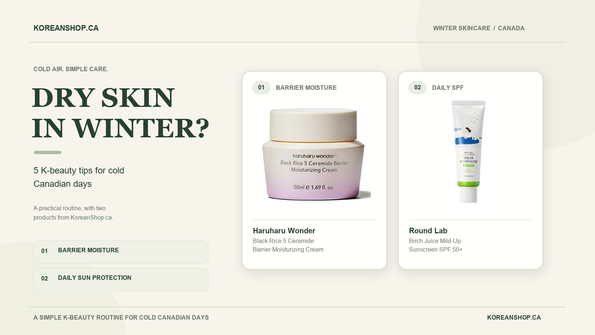
KoreanShop’s lotion and moisturizer collection includes products with different textures. One option to explore is Haruharu Wonder Black Rice 5 Ceramide Barrier Moisturizing Cream. Its product page lists a five-ceramide formula. Review the current product details and ingredient list to decide whether it suits your preferences.
What moisturizer ingredients should you look for?
Moisturizers can contain ingredients that attract water, soften the skin, or help reduce moisture loss. Depending on the formula, you may see ingredients such as glycerin, hyaluronic acid, ceramides, or oils. A product’s ingredient list can help you compare options, but it cannot predict exactly how your skin will react.
If you have a known sensitivity, check the complete ingredient list before trying a new product. “Natural” or “clean” on a label does not automatically mean a product will suit sensitive skin.
3. Add a hydrating layer only if you need one
Korean skincare includes many hydrating toners and serums, but a toner or serum is optional. If cleanser and moisturizer already leave your skin comfortable, you may not need another step.
If you want to try a hydrating product, add one at a time. Use it according to the label, then give your skin time to respond before adding anything else. This makes it easier to notice whether the product feels comfortable or seems to cause irritation.
A simple layering approach is to apply thinner products before thicker creams. Keep the routine manageable: a few products you can use consistently may be easier to stick with than a long routine you don’t enjoy.
4. Reconsider exfoliating products when skin feels irritated
Exfoliating acids, retinoids, scrubs, and other active products may suit some skincare routines. But if your face is very dry, stinging, or irritated, adding more active products can make it harder to identify what is bothering your skin.
You could temporarily simplify your routine to gentle cleansing, moisturizer, and daytime sun protection. If a non-prescription product seems to trigger irritation, consider pausing it while you see how your skin responds. If you use a prescribed treatment, speak with the healthcare professional who prescribed it before changing how you use it.
For more guidance on keeping a routine simple when your skin feels irritated, read How to Repair a Damaged Skin Barrier.
5. Protect exposed skin from cold weather and sun
When it is cold or windy, a scarf and other comfortable layers can cover exposed areas of your face. Gloves can help protect your hands outdoors. At home, notice whether indoor air feels unusually dry; a humidifier may be worth considering for your space. Follow the manufacturer’s directions for use and cleaning.
Sunscreen still belongs in a daytime routine during colder months. The American Academy of Dermatology recommends sun protection throughout the year, including sunscreen on exposed skin. (AAD: Cold Weather and Your Skin)
KoreanShop carries Round Lab Birch Juice Mild-up Sunscreen SPF 50+. Check its current product details and directions, and choose a sunscreen whose texture and finish you find comfortable.
A simple winter skincare routine for dry skin
Use this morning and evening routine as a starting point. You can adjust the number of steps based on your skin and the products you already use.
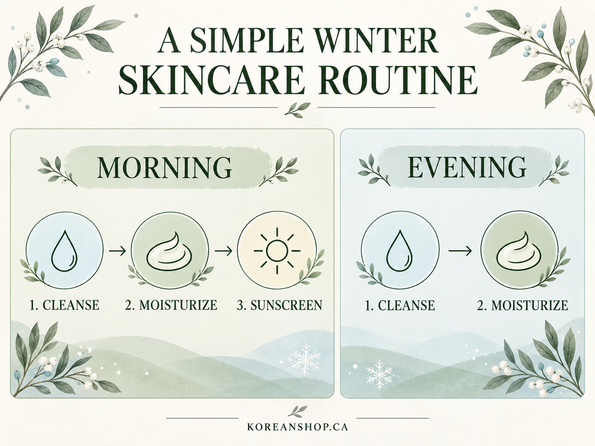
Morning routine
- Rinse with water or use a gentle cleanser if you need one.
- Apply a hydrating toner or serum if it already suits your skin.
- Apply moisturizer.
- Apply sunscreen to exposed skin and follow the product directions.
Evening routine
- Cleanse gently to remove the day’s sunscreen, makeup, and buildup.
- Apply one hydrating layer if you use one.
- Apply moisturizer while your skin is slightly damp.
If your skin feels irritated, keep the routine basic for now. You can consider adding other products later, one at a time. Avoid changing several products at once, because then it can be difficult to tell what your skin does or doesn’t tolerate.
Common winter skincare mistakes to avoid
Washing with very hot water
Hot water may feel relaxing after time outdoors, but it can leave dry skin feeling worse. Try warm rather than hot water when cleansing or showering.
Scrubbing away flakes
Flaking can make you want to exfoliate immediately. But rubbing with a rough cloth or scrub may increase discomfort. Use gentle cleansing and moisturizer, and seek advice if the flaking persists or gets worse.
Starting several new products at once
Adding multiple products together makes it harder to tell which one your skin likes. Introduce one new product at a time and follow its directions.
Assuming every dry patch needs an exfoliant
Dryness and flaking do not automatically mean your skin needs an exfoliating product. If your skin is also tight, stinging, or irritated, consider simplifying your routine first.
Skipping sunscreen on cold or cloudy days
Cold weather does not remove the need for sun protection. Use sunscreen on exposed skin during the day and follow the label directions.
Frequently asked questions about dry skin in winter
What is a good winter skincare routine for dry skin in Canada?
A simple winter skincare routine for dry skin can include gentle cleansing, moisturizer after washing, and sunscreen during the day. Add a hydrating toner or serum only if you want one and your skin tolerates it. Adjust the product textures based on how your skin feels.
Should I use a thicker moisturizer in winter?
You may prefer a cream if your skin feels dry, but it is a personal choice. The American Academy of Dermatology explains that creams are generally thicker than lotions. If your skin is oily or combination, you may prefer a lighter texture or apply moisturizer only to areas that feel dry. (AAD: How to Pick the Right Moisturizer)
Is Korean skincare good for dry skin?
Korean skincare includes many types of cleansers, toners, serums, creams, and sunscreens. Some products may fit your routine; others may not. Choose based on the product details, ingredient list, and how your skin responds rather than the country of origin alone.
Can I use exfoliating acids during winter?
Some people may continue using exfoliating products, but if your skin feels very dry or irritated, consider simplifying your routine and pausing non-prescription actives. Speak with your prescriber before changing a prescribed treatment.
When should I ask a healthcare professional about dry skin?
Ask for medical advice if the dryness is painful, cracked, bleeding, very itchy, getting worse, or not improving with simple care. Persistent redness or a rash may have a cause that skincare products alone cannot address. The American Academy of Dermatology recommends seeking care if dry skin becomes painful, cracked, bleeding, stinging, or very irritating. (AAD: How to Pick the Right Moisturizer)
Keep your winter skincare routine simple
Dry skin in winter can be frustrating, especially when cold outdoor weather and indoor heating are both part of your day. Start with a gentle cleanser, moisturize after washing, and use sunscreen on exposed skin. Add extra steps only when they have a clear purpose and feel comfortable for your skin.
Explore KoreanShop’s moisturizers and compare the product details to find a texture that fits your routine. If dryness continues or becomes painful, ask a healthcare professional for guidance.