
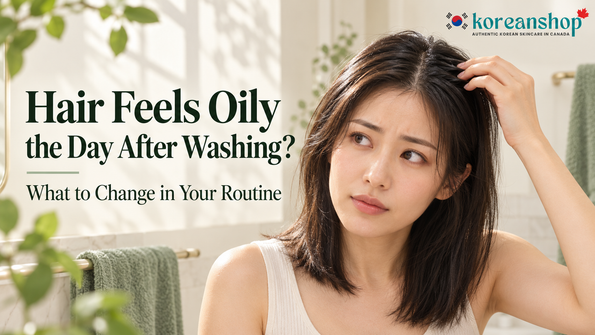
Oily hair after washing can be frustrating, especially when it looked clean and light the night before. By morning, the roots feel heavy, your fringe sits flat and you are wondering whether to wash it again.
It does not always mean you used the wrong shampoo. Your scalp naturally makes oil, and some people need to wash more often than others. Conditioner placement, styling products and how thoroughly you rinse can also affect how your hair feels.
Before buying a completely new haircare routine, check a few everyday habits. Small changes can help you understand whether you are noticing natural oil, leftover product or a scalp problem that needs attention.
For people in Canada, the routine may also change between summer workouts, winter hats and time spent indoors. Your washing schedule should fit your hair and daily life rather than a fixed rule you feel you must follow.
Why Does Hair Feel Oily So Soon?
Your scalp makes a natural oil called sebum. This oil helps protect the skin, but some people produce more than others. Oil can collect alongside sweat, dead skin and product left on the scalp. CDC guidance on scalp hygiene.
That means hair can feel oily hair after washing for more than one reason.
Sometimes the roots are simply ready for another wash. Sometimes a rich conditioner or styling cream has left them feeling coated. These situations can look similar, but buying a stronger shampoo is not automatically the answer.
Start by noticing the timing.
Does your hair feel heavy as soon as it dries? Or does it feel clean after washing and become oily the following day?
That difference gives you a useful starting point.
Natural Oil or Product Left Behind?
You cannot diagnose the cause by touch alone, but a few observations can help you review your routine.
| What you notice | What to check first |
|---|---|
| Roots feel heavy immediately after drying | Product amount, placement and rinsing |
| Hair feels clean after washing but oily the next day | Whether your washing schedule suits your scalp |
| Ends feel soft, but the top looks flat | Conditioner or styling products near the roots |
| Roots feel oily while the ends feel dry | Different care for the scalp and hair lengths |
| Oiliness comes with ongoing itching, soreness or flakes | Whether you need scalp-care advice |
Try making a short note after your next wash. Record what you used, where you applied it and how your hair felt once dry.
You do not need a detailed diary. Even “conditioner stayed on the ends today” can help you compare one wash with another.
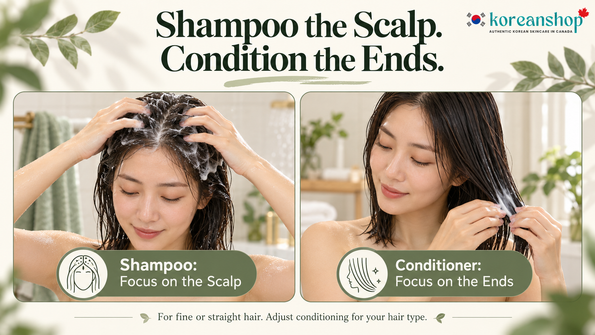
1. Change Where You Apply Shampoo
If you mostly rub shampoo through the ends, the scalp may not be getting the attention you intended.
The American Academy of Dermatology recommends applying shampoo to the scalp rather than working it through the full length of your hair. Conditioner then helps care for the hair itself. AAD healthy-hair guidance.
Wet your hair thoroughly and use your fingertips to spread shampoo over the scalp. Move gently around the hairline, crown, sides and back.
Avoid using your nails to scratch away oil. A sore scalp is not a sign of a better wash.
You also do not need to rub your hair lengths together. Let the shampoo rinse through them without rough handling.
2. Check How Thoroughly You Rinse
A rushed rinse is worth reviewing if your hair never feels properly clean.
Pay attention to areas that are easy to miss, such as behind the ears, the back of the head and under thicker sections of hair.
Shampoo should rinse away, while conditioners and styling products can leave material on the hair depending on their formula and use. DermNet also notes that harsh washing can leave the scalp dry and prone to irritation. DermNet information on shampoo.
Use comfortable water and follow the product directions. There is no need to turn the water very hot or keep washing until your hair feels rough.
The aim is a thorough rinse, not the strongest possible cleaning sensation.
3. Keep Rich Conditioner Away From Oily Roots
Conditioner is not automatically a problem for oily hair after washing. Where you put it matters.
If you have fine or straight hair, start with the ends rather than covering the scalp. Dry or curly hair may need conditioner over more of the length. AAD conditioning advice.
Think about the parts of your hair separately:
- The scalp needs cleansing.
- Dry lengths may need conditioning.
- The roots may not need the same rich product as the ends.
Try changing the placement before giving up conditioner completely.
For example, if your hair reaches your shoulders, you could concentrate the product on the lower lengths, following its directions. Compare the result with your usual full-head application.
If your hair is very short, use the amount and method that suit its length rather than copying a long-hair routine.
4. Wash According to Your Hair, Not a Fixed Schedule
You may have heard that washing often is always bad, or that everyone should wait several days between washes.
Hair needs vary.
People with straight hair and an oily scalp may need frequent washing, while dry, thick or curly hair can need a different schedule. Age, hair length and texture also affect what works. Cleveland Clinic guidance on washing frequency.
If your scalp is oily and uncomfortable the next day, waiting longer is not automatically useful. Equally, if washing more often leaves your lengths dry and difficult to manage, review your products and application.
A suitable schedule should leave your scalp comfortable without making your hair harder to care for.
Do not judge your routine against someone with a different hair type.
5. Review Oils, Creams and Styling Products Near the Scalp
Shampoo may get the blame when the heavier feeling comes from something applied afterward.
Look at your leave-in conditioner, hair oil, smoothing cream, wax and other styling products.
Ask yourself:
- Am I using several products for the same purpose?
- Am I applying them directly to the roots?
- Do I add more each morning without washing them out?
- Does the oily feeling appear only after styling?
Styling products can build up and make hair feel oily. Cleveland Clinic recommends reviewing these products and keeping conditioning treatments focused on the ends when appropriate. Hair-washing and product advice.
For your next comparison, leave out one optional styling product. Keep the rest of the routine similar so you can see whether it makes a difference.
You do not need to remove every product at once.
6. Use Dry Shampoo as a Short-Term Option
Dry shampoo can help when you are short of time. It absorbs oil and can make the roots look fresher.
It does not wash the scalp.
The AAD advises continuing regular washing with shampoo and water, using dry shampoo only where needed and following its directions. Too much can leave hair feeling stiff or leave visible particles. AAD dry-shampoo advice.
Avoid adding another full layer every day simply because the first application helped.
If your scalp starts itching, burning or feeling uncomfortable, stop using the product and review your routine. Persistent symptoms deserve professional advice.
Dry shampoo is useful for an occasional busy morning. It should not become the only way you manage a scalp that regularly feels oily.
7. Stop Brushing More Than You Need To
Brushing may make the hair look smoother, but repeated brushing can move oil from the scalp through the hair.
MedlinePlus advises avoiding brushing too often or too strongly when managing oily hair after washing. MedlinePlus information on oily hair.
Use brushing to detangle and style rather than repeatedly checking whether the roots look better.
Be gentle with wet hair, too. Avoid pulling through knots or rubbing your hair roughly with a towel. AAD advice on preventing hair damage.
The goal is manageable hair without unnecessary pulling or friction.
A Simple Wash-Day Routine to Try
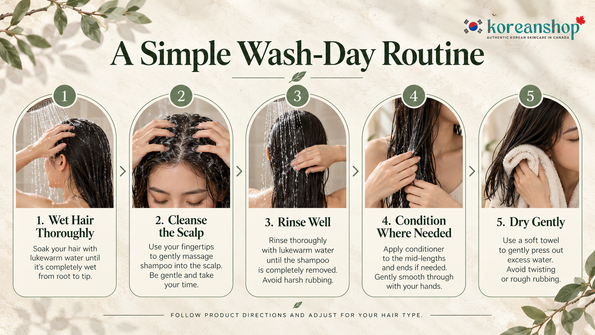
Use this as a starting point, then adjust it for your hair type and product directions.
Before Washing
Think about what is on your hair. Did you use dry shampoo, oil, a rich mask or several styling products?
That information helps you understand the result later.
During Washing
- Wet your hair thoroughly.
- Apply shampoo mainly to the scalp.
- Massage gently with your fingertips.
- Rinse carefully.
- Apply conditioner where the hair needs it.
- Rinse according to the conditioner directions.
After Washing
Gently remove extra water and keep optional styling products simple.
Once the hair is dry, check how it feels before adding anything else. If the roots already feel heavy, you have a different issue to investigate than hair that feels clean until the following afternoon.
Change one part of the routine at a time.
Two Haircare Options to Consider at KoreanShop
A routine review does not have to start with a purchase. If you do want to compare products, choose according to the step you need help with.
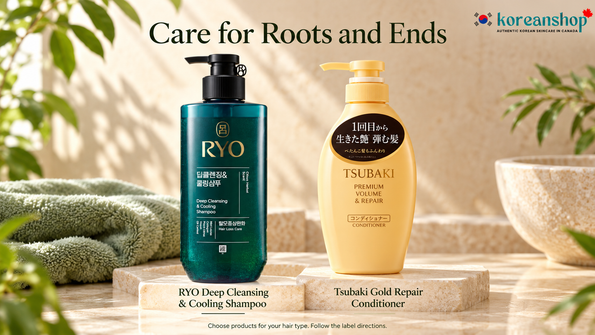
RYO Deep Cleansing & Cooling Shampoo 480ml
KoreanShop lists RYO Deep Cleansing & Cooling Shampoo as an option for removing excess oil and daily buildup.
It contains menthol and fragrance, so consider your own tolerance before choosing it. A cooling feeling does not prove that a shampoo cleans better, and it may not suit a sensitive or already irritated scalp.
Use the current packaging directions rather than leaving it on longer for a stronger effect. Availability can change, so check the product page before ordering.
This is a shampoo option, not a promise that your hair will stay oil-free for a certain number of days.
View RYO Deep Cleansing & Cooling Shampoo.
SHISEIDO Tsubaki Gold Repair Conditioner 450ml
For the conditioning step, KoreanShop also lists SHISEIDO Tsubaki Gold Repair Conditioner 450ml.
This is a Japanese haircare product, included here as an option for the hair lengths rather than a treatment for scalp oil.
If your roots feel oily but the ends need conditioning, review where you apply it and how much you use. Follow the packaging and compare the finish with your current conditioner.
It is optional. If the conditioner you already own leaves your ends comfortable without making your hair feel heavy, there may be no reason to change it.
View SHISEIDO Tsubaki Gold Repair Conditioner.
What About Canadian Winter Hats and Summer Workouts?
Your routine needs to fit what you do during the day.
If you wear a winter hat for your commute, notice whether your hair looks flat only after removing it or already feels oily before leaving home. These are useful observations, even if they do not explain the cause by themselves.
In summer, record whether the problem follows workouts or long periods outdoors. You may need to plan washing around your own comfort, hair type and styling needs.
Canada has different climates and lifestyles. There is no single washing schedule that fits everyone from a winter outdoor worker to someone exercising indoors.
Keep the seasonal adjustments practical. Change the timing, placement or amount of optional products before assuming you need a whole new haircare range.
Oily Roots and Dry Ends Need Different Attention
It can be frustrating when shampoo seems to help the roots but makes the ends harder to manage.
Do not treat the whole head as one uniform area.
Focus cleansing on the scalp and give the lengths suitable care. Avoid adding oil to the roots just because the ends feel dry.
You could record the result like this:
“Roots felt clean after drying. Ends felt rough. Next wash, I will keep the shampoo step the same and adjust conditioner placement.”
This approach gives you a clearer comparison than changing shampoo, conditioner and styling products together.
If the routine continues to leave your hair difficult to manage, a stylist can help assess hair texture and product use. Scalp symptoms may need a healthcare professional.
When Oiliness Comes With Flakes or Itching
Oiliness alone is different from an ongoing scalp problem.
Dandruff can occur with an oily scalp and may cause itching. It does not automatically mean you need more hair oil. The AAD recommends following the directions for a suitable dandruff shampoo and choosing a washing approach that fits your hair type. AAD dandruff guidance.
Ask a pharmacist or clinician for advice if you are unsure what you are treating.
Seek an assessment for persistent soreness, painful bumps, worsening flakes, patchy hair loss or symptoms that do not improve with suitable care. Do not keep adding stronger products to a scalp that is becoming more uncomfortable.
Frequently Asked Questions
Is it normal for hair to feel oily the next day?
It can be. People make different amounts of scalp oil, and some need more frequent washing. Check whether your hair feels clean after a wash and whether the schedule suits you.
Should I stop using conditioner?
Not automatically. First review the amount and placement. Your ends may still benefit even when your roots get oily.
Do I need to shampoo twice every time?
No universal rule requires it. Follow the product directions and assess whether your current wash removes what is on your scalp without causing discomfort.
Will cold water stop my scalp making oil?
A cold rinse is not a reliable way to switch off oil production. Focus on suitable washing, rinsing and product use.
Do I need a scalp scrub?
Not simply because your roots feel oily. Start with your regular washing habits. Avoid scrubbing an itchy, sore or inflamed scalp.
How will I know which change helped?
Keep most of the routine the same and change one thing. Compare how the hair feels after drying and again the next day.
Start With One Change at Your Next Wash
If your hair feels oily the day after washing, begin with the basics: where shampoo goes, how thoroughly you rinse, where conditioner is applied and whether your schedule suits your scalp.
Then review optional oils, creams and dry shampoo.
You may find that a small adjustment makes the routine easier to manage. If you decide to explore other options, browse KoreanShop’s haircare selection and check the current product directions before buying.
The aim is a comfortable scalp and hair you can manage—not forcing your roots to stay oil-free for a set number of days.